
Club Outerwear
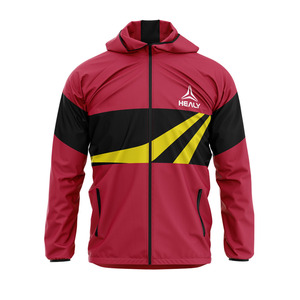
Waterproof Shell
Micro-Mesh
Engineered in our ISO-compliant Sialkot manufacturing facilities, these commercial baselayers, team tracksuits, and weather-resistant athletic garments are customized to meet Argentine market athletic specifications and climatic realities.
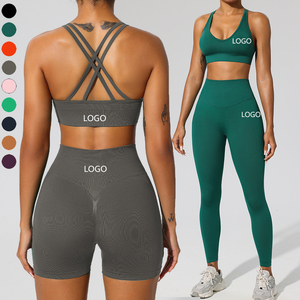
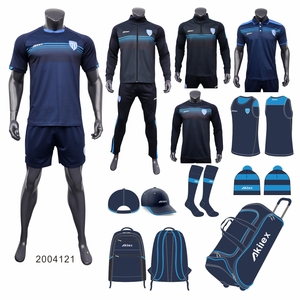
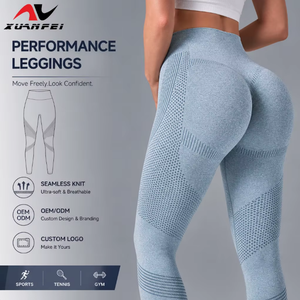
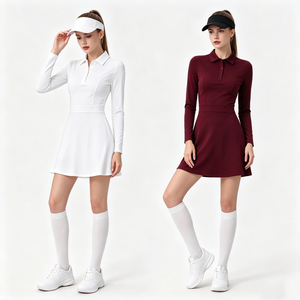
The market for custom performance compression gear across the Argentine Republic has experienced a structural shift. Beyond simple polyester baselayers, elite Argentine franchises—competing across URBA (Unión de Rugby de Buenos Aires), the Argentine Primera División (AFA), the high-growth professional Padel circuit, and cross-country mountain endurance events—require verified graduated elastane textiles engineered to prevent muscle oscillation, enhance lactate clearance, and accelerate post-match venous return.
When Argentine sportswear brands, professional athletic directors, and private retail labels evaluate offshore manufacturing, compression performance must be calibrated mathematically. Graduated compression requires a diminishing pressure gradient: pressure must peak at the distal extremities (the ankle or wrist at 20–25 mmHg) and systematically reduce proximally toward the calf, thigh, and core (12–15 mmHg). Achieving this in mass bulk production requires high-tension circular knitting or specialized warp-knit interlock fabrics featuring an authentic 75/25 or 80/20 polyamide (Nylon 6.6) to Spandex (Lycra) blend, moving away from low-cost, non-recovering circular polyester.
Contact athletics such as Argentine rugby and futsal subject apparel to extreme directional sheer forces. Flatlock differential feed stitching eliminates bulk on the skin, prevents severe chafing during 90-minute matches, and holds structural integrity at up to 350 Newtons of tensile strain.
During intense humid competition in Buenos Aires or tropical tournaments in Santa Fe, micro-grooved synthetic yarns utilize capillary dynamics to pull perspiration off the dermis to the outer face, where it evaporates instantaneously without adding garment water-weight.
Ordinary cheap elastane suffers from hysteresis (permanent mechanical stretching) after repeated laundry cycles. Our export-grade compression textiles sustain over 92% recovery rate after 100 industrial wash cycles, safeguarding calibrated blood-flow management over complete sporting seasons.
To assist Argentine procurement officers, importers, and brand visionaries in bypassing intermediary trading companies, we review the top 10 custom sports compression suppliers based on technical capability, logistics efficiency to South America, MOQ adaptability, and compliance standards.
Operating directly from Sialkot’s legendary industrial textile belt, Bralen Industries stands as the industry leader for integrated custom compression apparel, sports uniforms, and technical outerwear. Offering a complete vertical ecosystem comprising laser cutting, high-tension flatlock stitching, precision sublimation printing, and an uncompromising in-house AQL 2.5 quality control infrastructure.
Key Advantage for Argentina: Direct manufacturer pricing eliminates middleman markups; full compliance with Argentine commercial invoicing, packing lists, and custom technical specification packs simplifies clearance through AFIP/SEDI.
Get a QuoteA large-scale institutional subcontractor with heavy specialization in circular knitting and football club uniforms. While their technical infrastructure handles massive scale, higher minimum order quantities limit early-stage startups and regional Argentine clubs seeking agility.
Buyer Consideration: Best suited for massive national tender contracts rather than agile private-label seasonal drops.
Get a QuoteSpecializing in Santoni seamless knitting machines, this manufacturer excels in women's high-waist compressive yoga wear and ribbed leggings. Excellent colorfastness and nylon blends, though language barriers and complex import duties under MERCOSUR-China rules require careful handling.
Buyer Consideration: Excellent seamless finishing, but higher tooling costs for custom jacquard waistband modifications.
Get a QuoteA Brazilian regional supplier offering Mercosur tariff exemptions (Arancel Externo Común - AEC 0%). While transit time to Buenos Aires or Córdoba by overland truck is fast, baseline raw material and labor costs are significantly higher than Asian and Pakistani mills.
Buyer Consideration: Duty-free import advantage is partially offset by 40-50% higher ex-factory base manufacturing costs.
Get a QuoteFocused predominantly on combat sports compression, Brazilian Jiu-Jitsu rash guards, and MMA performance wear. Known for vibrant digital sublimation printing that withstands extreme mat friction without peeling or crack-fissuring.
Buyer Consideration: Superb sublimation durability; less focus on formal lifestyle or recovery garments.
Get a QuoteRenowned for high-tech poly-elastane yarn formulations with antibacterial silver-ion infusions and OEKO-TEX Class 1 certification. Very strong in medical-grade therapeutic recovery sleeves, but pricing per garment sits at the premium echelon.
Buyer Consideration: Exceptional yarn quality; premium pricing targeted at clinical-level sportswear.
Get a QuoteSpecialists in fabric synthesis, supplying compression rolls and semi-finished compression shells. They incorporate infrared bio-ceramic yarn designed to stimulate localized oxygenation in muscle tissues during sustained cardiovascular exertion.
Buyer Consideration: Unsurpassed polymer tech, but high minimum fabric volume requirements for cut-and-sew programs.
Get a QuoteServing high-end European athleisure labels with sustainable recycled econyl yarn compression. They cater to boutique designer sportswear brands in Buenos Aires (Palermo Soho market) seeking European luxury positioning.
Buyer Consideration: High retail appeal, but ex-factory production costs can challenge margin resilience under Argentine import tariffs.
Get a QuoteA major manufacturing engine for Tier-1 multinational athletic brands. Massive scale for bonded seams and heat-sealed compression garments, but rigid schedule queues make rapid replenishment cycles difficult for boutique distributors.
Buyer Consideration: Strict booking timelines require minimum 6-month seasonal forecasting.
Get a QuoteA manufacturing partner catering primarily to North and South American regional demand. Strong in standard polyester baselayers and athletic shorts, offering convenient time-zone alignment with Buenos Aires procurement teams.
Buyer Consideration: Convenient communication hours; moderate technical compression capability compared to specialized Asian hubs.
Get a QuoteA direct cross-comparison of manufacturing technicalities, stitching systems, and supply-chain flexibility crucial for commercial sports apparel purchasing in South America.
| Manufacturer | Hub Origin | Compression Fabric Composition | Stitching Construction | Flexible MOQ | Customs DDP Readiness |
|---|---|---|---|---|---|
| Bralen Industries | Sialkot, Pakistan | 75/25 Nylon-Lycra (220-280 GSM) | Flatlock 4N6T + Bartacking | Yes (30-50 pcs) | Full AFIP/SEDI Protocol |
| Forward Athletic | Punjab, Pakistan | 85/15 Poly-Spandex (200 GSM) | Overlock + Safety Stitch | No (500 pcs) | Standard FOB Only |
| Dongguan FitTech | Guangdong, China | 90/10 Polyamide Seamless | Circular Santoni Seamless | Moderate (300 pcs) | Commercial Agent Dependent |
| Santa Catarina | Blumenau, Brazil | 80/20 Polyamide Warp | 3-Needle Flatseam | Yes (100 pcs) | Mercosur Bilateral Protocol |
| Apex Combat | Sialkot, Pakistan | 82/18 Poly-Elastane Blend | Reinforced 4-Needle Flatlock | Yes (50 pcs) | Courier Express Available |
| Porto Atelier | Braga, Portugal | ECONYL Recycled Nylon 78/22 | Bonded Ultrasonic / Flatlock | Moderate (150 pcs) | Air Freight Standard |
Understanding the Argentine sporting ecosystem is fundamental to developing successful private label collections and club equipment lines. Generic athletic garments fail when exposed to the distinct physiological and cultural environments across Argentina's provinces.
From Buenos Aires clubs (SIC, CASI, Hindú) to interior provincial leagues in Tucumán and Rosario, rugby collision loads demand durable 280 GSM compression under-shorts. These require abrasion-resistant outer finishes and double-ply groin panels that resist mud adhesion and heavy friction during scrums and rucks on natural grass.
Padel has seen an extraordinary resurgence across Buenos Aires, Córdoba, and Mendoza. The sport's rapid, explosive lateral multi-directional lunges demand high-tension waistbands and inner-thigh compression shorts featuring deep pockets specifically sized and angled for paddle ball retention without slip.
Trail athletes participating in Bariloche or Salta mountain events experience severe temperature fluctuations and thin air. Compression tights utilizing hollow-core thermo-regulating fibers provide graduated 20-30 mmHg calf stabilization to reduce micro-trauma during intense downhill descents along rocky Andean trails.
Sourcing apparel for the Argentine market requires navigating evolving economic parameters. With updates to import clearance mechanisms (transitioning from SIRA to the new SEDI system) and currency shifts, leading local retail brands and team franchises are adopting agile manufacturing models to preserve working capital while securing consistent garment quality.
Rather than committing capital to 5,000-piece container orders subject to volatile exchange rates, Argentine brands are utilizing Bralen Industries' flexible 50-piece minimums to test targeted collections in micro-batches, matching production directly to consumer demand.
Consumers in Rosario, Córdoba, and Capital Federal increasingly favor distinctive Argentine domestic brands over generic imports. Brands require complete end-to-end customization: bespoke silicone interior waist-grippers, custom-molded brand tags, and unique pantone color stories reflecting local aesthetics.
The intersection of physiotherapy, post-operative rehabilitation, and elite training has driven demand for verified graduated mmHg garments. Buyers are seeking authenticated testing certifications rather than aesthetic, uncalibrated spandex claims.
Every order follows a transparent stage-gate development workflow designed to guarantee prototype-to-bulk fidelity without linguistic or geographic friction.
CAD rendering, grading verification (South American anatomical charts), elastane ratio confirmation, and initial target costing.
Dyeing to precise Pantone standards, flatlock seam calibration, and sample dispatch to Argentina within 7–14 days.
Automated tension-free fabric laying, laser-guided cutting, computerized sublimation, and 4-needle stitching assembly.
Dimensional tolerance audits (±1cm), stretch modulus recovery checks, seam tensile testing, and packaging verification.
Export cartoning, customs declarations, direct air DDP dispatch to Ezeiza or palletized sea freight to Puerto de Buenos Aires.
Based in Sialkot, Pakistan—the globally recognized epicenter of performance athletic manufacturing supplying major international football tournaments—Bralen Industries combines artisanal tailoring heritage with high-tech apparel assembly.
No sourcing agents, export brokers, or trading company markups. You interact directly with our factory merchandising team and master pattern-makers, ensuring clear technical communication and transparent pricing.
The sample you approve is the benchmark for production. We physically seal approved prototypes, and our QA team checks bulk runs against exact measurement specs to prevent sizing discrepancies.
Argentine customs clearance demands rigorous commercial compliance. We supply accurate Certificate of Origin forms, commercial invoices formatted to AFIP guidelines, bilingual packing lists, and proper carton labeling.
Detailed practical answers addressing commercial regulations, customs protocols, and production workflows when sourcing custom compression wear from Pakistan to Argentina.