
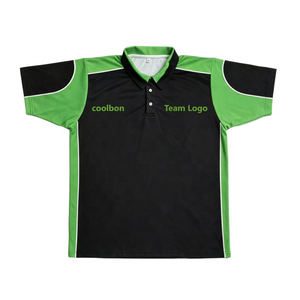
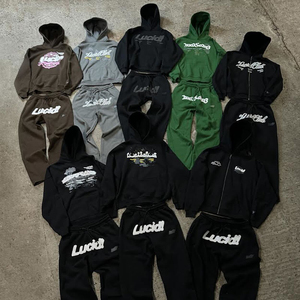
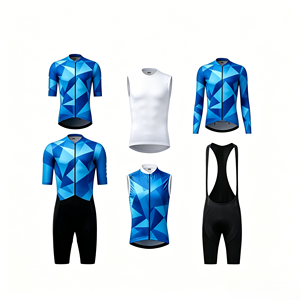
Precision-milled athletic knitwear engineered for professional clubs, tournament organizers, and international private label sportswear brands. Select a core product architecture below to inspect standard technical parameters.
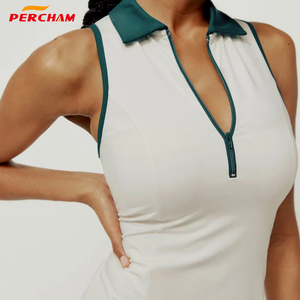
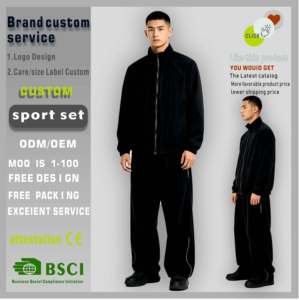
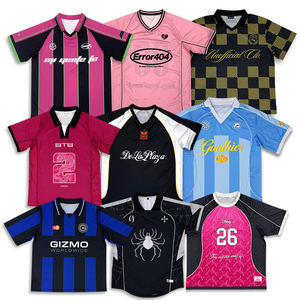
A comprehensive analysis for B2B brand owners, sportswear sourcing directors, and supply chain managers navigating raw material selections, sublimation physics, and international trade compliance.
Traditional soccer kits depended heavily on generic circular-knit polyester. In contrast, modern performance uniforms demand micro-filament, multi-channel yarn extrusions engineered for rapid capillary action. By utilizing cross-sections like modified trilobal or tetrachannel filaments, modern fabrics transport moisture outward, increasing evaporative surface area by up to 42% compared to standard flat polyester threads.
For elite match play, fabric weight must balance durability against drag. High-performance factories utilize body-mapped jacquard or variable-gauge double-interlock weaves ranging from 130 GSM to 165 GSM. High-friction zones benefit from reinforced interlock knits, while high-sweat zones (lumbar, underarm, upper chest) incorporate computerized micro-mesh perforations without compromising structural seam integrity.
| Fabric Parameter | Standard Training Kit | Matchday Pro Tier | Blokecore / Lifestyle Streetwear |
|---|---|---|---|
| Fiber Blend | 100% Virgin Interlock Poly | 88% Recycled Poly / 12% Spandex | 100% Textured Air-Jet Poly or Poly/Cotton |
| Areal Density | 135 - 145 GSM | 150 - 165 GSM Body-Mapped | 180 - 220 GSM Heavyweight |
| Wicking Index | Standard Capillary Wicking | Hydrophilic Chem-Finish + Micro-Perforations | Basic Breathable Finish |
| Tensile Strength | Medium Abrasion Resistance | Anti-Tear High Elongation | High Structural Stiffness |
Full-dye sublimation operates on the thermodynamic principle where solid dye particles undergo instant phase transformation into gas under calibrated thermal energy (typically 195°C to 205°C) and uniform mechanical pressure. The gaseous dye opens the crystalline structure of hydrophobic polyester polymers, locking pigment within the polymer chains rather than coating the textile surface.
To meet Tier-1 procurement standards, China manufacturing centers employ water-based, low-VOC dispersant inks paired with Japanese industrial printheads (such as Epson I3200 or Kyocera piezo arrays). This delivers photographic-grade resolution at 1200+ DPI while guaranteeing color fastness ratings of Grade 4.5+ against domestic laundry cycles, saltwater exposure, and accelerated xenon-arc UV exposure. Consequently, logos, geometric micro-stripes, and photographic club motifs retain vibrant edge-definition across seasons.
Sportswear sourcing is experiencing major structural transformations driven by environmental regulations and lean retail mechanics. Sourcing officers must prepare for three critical industrial shifts:
A. Post-Consumer Recycled (rPET) & Closed-Loop Circularity: Global athletic leagues now mandate lower carbon footprints across merchandising programs. Leading factories have established certified supply routes for GRS (Global Recycled Standard) verified post-consumer plastic bottle flake pellets, allowing brands to source 100% rPET uniforms that match virgin fiber hand-feel, tensile parameters, and dye absorption.
B. 3D Digital Prototyping (Clo3D / Browzwear): The legacy cycle of spending 4 to 6 weeks on physical proto revisions is obsolete. Current workflows implement true-to-physics 3D simulation engines. Brands test pattern stress, drape, and graphic scale virtually, cutting sampling time to 48 hours and drastically reducing initial fabric waste.
C. The "Blokecore" Streetwear Convergence: Modern soccer kits increasingly intersect with daily high-street apparel. This calls for boxy silhouettes, drop shoulders, heavy jacquard ribbed collars, and tactile mixed-media finishing (including high-build 3D silicone badges, metallic heat-transfer film, and textured flocking).
Operating beyond broker networks, our direct production complex pairs automated cutting, specialized activewear stitching floors, and closed-loop lab inspection into one traceable hub.
Communicate directly with pattern engineers and master cutters. Eliminating commission agents ensures factory-floor pricing transparency, faster spec adjustment, and uncompromised unit economics on scale orders.
Approved pre-production samples are sealed as strict physical benchmarks. Our inline quality control audits laser-cut dimensions against approved grading sheets with tolerances maintained within ±0.5 cm.
From micro-perforated dye sublimation to ultrasonic seamless bonding, high-definition woven crests, matte 3D thermal silicone badges, and multi-thread flatlock stitching, we tailor decoration methods to exact brand books.
We supply retail-ready apparel complete with custom woven neck labels, recycled polybags, custom hangtags, barcodes, and automated carton assortment labeling prepared for international third-party fulfillment.
Every bulk lot undergoes four mandatory testing checkpoints: raw yardage tension inspection, printed panel shade-matching, inline stitch strength tensile testing, and final random sampling under ISO-compliant AQL 2.5 standards.
Exporting to over 45 countries, our in-house shipping desk arranges consolidated sea freight (FCL/LCL), air cargo, and reliable door-to-door DDP transit solutions, coordinating all commercial declarations directly.
Clear, direct technical answers covering minimum volumes, sampling schedules, artwork formats, and laboratory test compliances.
Because full-dye sublimation relies on digital roll-to-roll printing rather than traditional screens, our typical MOQ starts at 100 pieces per design across assorted size breakdowns. For complex cut-and-sew constructions or custom-dyed yarns outside stock pantone ranges, MOQs generally adjust to 300-500 pieces per colorway.
Prototyping and size-set fit sampling generally require 7 to 10 business days after digital artwork approval. Bulk production schedules vary by volume: orders between 500 and 5,000 units take approximately 3 to 4 weeks, while larger container shipments complete within 5 to 6 weeks.
Artwork files must be provided as vector data in Adobe Illustrator (.AI), Editable PDF, or EPS formats with all typefaces converted to outlines. For precise color fidelity across sublimated runs, color codes should be specified using the Pantone Matching System (PMS Formula Guide Coated).
Yes. Digital sublimation allows us to serialize individualized roster rosters seamlessly without incurring screen charges. Variable names, squad numbers, and custom sponsor alignments are populated directly into our nested cut-marker layouts prior to laser cutting.
Our internal laboratory subjects production line samples to martindale abrasion tests, four-stage wash cycling at 40°C, and seam elongation tension tests. Every production run is documented with a certified inspection report matching ISO/AQL 2.5 standards before customs dispatch.
Consult with our lead sportswear merchandisers and pattern makers today. Receive a tailored commercial quotation, material swatches, and complete technical pack evaluation within 24 business hours.
Send an Inquiry