Engineered specifically for pro-circuit intensity, collegiate tennis teams, luxury resort collections, and high-growth athletic labels. Every garment is constructed to match exacting global apparel tolerances (±0.5cm), integrating moisture management chemistry, inverted aerodynamic ball-pocketing systems, and 4-way elastic recovery.
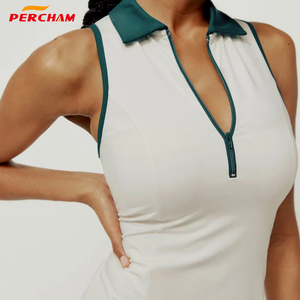
230 GSM 75D/72F micro-denier Interlock knit (75% Recycled Polyamide, 25% Spandex). Built-in liner shorts with inverted non-slip ball-holding elasticity, concealed front SBS zipper, and anti-static wicking finish.
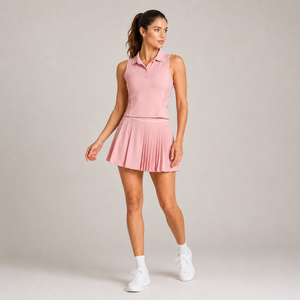
Dual-phase ergonomic set featuring an athletic crop racerback tank paired with an A-line pleated skirt. Reinforced wide waistband eliminates roll-down during rapid baseline lateral cuts; certified UPF 50+.
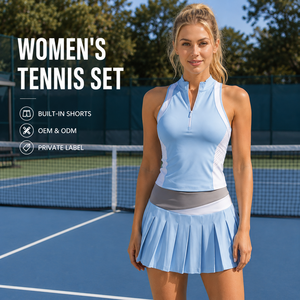
High-gauge 210 GSM warp-knit stretch fabric. Ergonomic sleeveless contouring reduces underarm drag; 2-in-1 compression under-shorts feature dual ball/phone side pockets and flatlock anti-chafing seams.
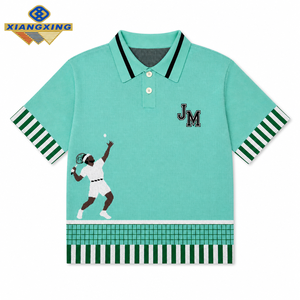
14-gauge seamless engineered jacquard knit combining performance hydrophobic polyester and long-staple combed cotton. Ultra-soft touch, high-ventilation textured mesh zones, anti-pilling Grade 4.5.
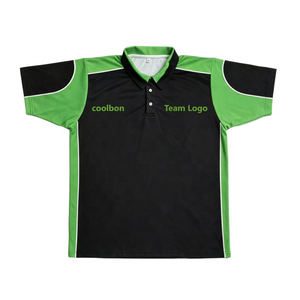
160 GSM microporous birdseye pique mesh. High-definition Italian Kiian dye-sublimation ink infusion maintains 100% fabric porosity and breathability without color fading through 50+ commercial wash cycles.
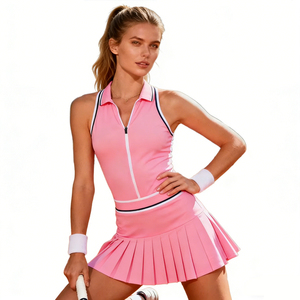
Architectural mock-neck tennis silhouette engineered with bonded thermal tape along hem lines. High compression recovery modulus prevents bunching across core rotation during explosive overhead smashes.
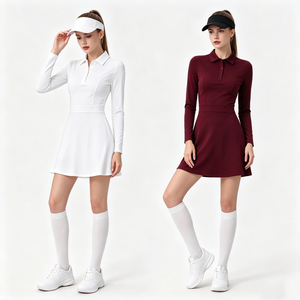
All-weather UV shield court dress featuring UPF 50+ titanium-infused fibers. Includes thumbholes, secure ergonomic side-seam pockets, and underarm aerated micro-mesh inserts for dynamic thermal regulation.
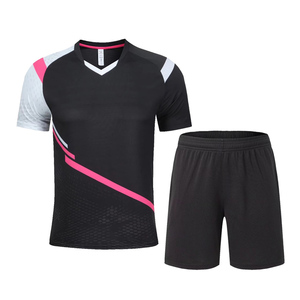
140 GSM ultralight diamond-weave polyester with hydrophilic moisture treatment. Engineered for multi-racket team sports, cross-club uniforms, and high-frequency seasonal club tournament distribution.
Modern tennis demands acute biomechanical mobility, explosive lateral shifts, and resilience across extreme thermal environments. Sourcing managers and performance apparel founders must evaluate athletic garments beyond surface aesthetics. Our engineering lab deconstructs the key textile trends driving contemporary court lines.
While circular weft knits dominate generic gym tees, high-tier tennis skorts and dresses demand high-gauge warp knitting (such as 28G to 36G tricot). Warp knit configurations prevent unraveling, provide superior 4-way compression recovery, and eliminate "sheer show-through" under extreme squat and lunging loads on hard courts.
A recurring flaw in amateur tennis wear manufacturing is improper pocket shear modulus. If the liner pocket is too loose, regulation tennis balls (56.0–59.4g) bounce out during sprint deceleration; if too tight, extraction interrupts service rhythm. We calibrate pocket angles using inverse dual-layer spandex bindings with silicone micro-beading.
To combat heat buildup during 3-set matches in direct sunlight, pattern engineering incorporates localized laser-perforated aeration zones aligned with major sweat maps (spine channel, lateral ribcage, and lower lumbar). Coupled with flatlock ISO 607 stitching, internal surface friction is reduced by 64% compared to standard overlock seams.
Institutional buyers, direct-to-consumer athletic brands, and club procurement heads face shifting supply chains, fluctuating shipping corridors, and stringent environmental disclosures. Below is an executive breakdown of the strategic trends reshaping athletic apparel purchasing.
The global tennis and racquet apparel market is projecting a CAGR of 6.8% through 2030, driven by the pickleball and padel boom. Buyers are pivoting away from single-season activewear towards multi-functional, high-durability fabrics with verified GRS certification, lower MOQ agile batch commitments, and 3D digital CLO sampling workflows that compress product lifecycles from 6 months down to 21 days.
Tier-1 retailers in the EU and North America now require verified traceability for synthetic fibers. Premium virgin nylon is systematically being substituted with recycled polyamide 6.6 derived from post-consumer fishing nets and pre-consumer industrial waste. This provides an identical tensile strength (4.8 cN/dtex) while lowering greenhouse footprint per unit by up to 45%.
Rather than holding inventory of 5,000 units per colorway, innovative tennis labels are placing initial orders of 300 to 500 units across curated color stories (e.g., retro vintage ivory, forest court green, clay-court terracotta). Factories capable of flexible digital roll-to-roll sublimation and modular cut-and-sew lines are securing dominant OEM market share.
Consumer behavior confirms that over 55% of tennis-inspired dresses and pleated skorts are worn off-court for social dining, travel, and leisure. Sourcing specifications now mandate subtle, matte-finish microfibers over glossy synthetics, concealed pocket geometry that accommodates 6.7-inch smartphones alongside tennis balls, and discrete tonal branding.
Compare our factory standard execution parameters across primary tennis apparel categories. These metric tolerances represent our baseline production capability for OEM and private-label partners.
| Garment Category | Optimal Fabric GSM | Yarn Composition | Stitching Construction | Colorfastness Rating | Recommended Decoration |
|---|---|---|---|---|---|
| Pro Tennis Dresses & Skorts | 220 – 260 GSM | 75% Recycled Nylon / 25% Spandex | ISO 607 Flatlock + Bonded Hem | Grade 4.5 Perspiration | Subtle Heat Transfer / Matte Silicone |
| Performance Match Polos | 150 – 180 GSM | 100% Micro-Birdseye Poly or Poly/Cotton | Coverstitch + Interlock Collar | Grade 4.0 Light Fastness | Sublimation / Jacquard Knit / Embroidery |
| Court Compression Shorts / Liners | 240 – 280 GSM | 78% Polyester / 22% Roica Elastane | 4-Needle 6-Thread Reinforced | Grade 5.0 Rubbing Fastness | Non-slip Silicone Gel Grippers |
| Warm-Up Half-Zips & Track Jackets | 280 – 340 GSM | 90% Poly / 10% Spandex French Terry | Twin-Needle Topstitch + YKK Zips | Grade 4.5 Dry Cleaning | 3D High-Density Rubber Print |
| Training Tees & Racket Tank Tops | 130 – 160 GSM | 88% Poly / 12% Spandex Aerated Mesh | Overedge with Chainstitch Safety | Grade 4.0 Washing | Reflective 3M Scotchlite / Water-based |
Eliminate trading intermediaries and unpredictable subcontracting networks. We provide end-to-end manufacturing oversight from CAD grading to containerized export shipping, operating under rigorous ethical compliance and precision equipment standards.
Send us a physical reference garment, a Figma vector sketch, or a finalized AI tech pack. Our pattern engineers utilize Optitex CAD software to create digital 3D virtual fittings and deliver graded marker nesting with fabric utilization rates exceeding 88%.
Equipped with industrial high-speed Mimaki digital sublimation printers and non-toxic, OEKO-TEX certified Italian inks. We offer precision Pantone matching (PMS target accuracy ΔE<1.0) with zero ghosting and deep color saturation across complex court motifs.
Deliver a bespoke out-of-the-box retail experience. We source, formulate, and assemble high-density silicone heat transfer neck labels, customized recycled hang tags, branded metal zipper pullers, anti-slip waistband elastic jacquards, and biodegradable frosted polybags.
Our quality control protocols monitor 4 inspection tiers: raw fabric greige inspection (4-Point System), in-line sewing stitch audit, post-assembly dimensional measurement tolerance check, and pre-carton metal detector verification for absolute safety.
Clear, definitive answers to the most common commercial, technical, and logistics questions submitted by apparel founders, brand directors, and tournament apparel organizers.
Our standard MOQ starts at 200 to 300 pieces per style/colorway, which can be split across standard sizing (XS through 2XL). For sublimation printed tennis tops or custom club jerseys utilizing stock performance base fabrics, we can accommodate agile introductory test runs of 100 pieces to assist emerging brands in validating new market collections.
Initial counter-samples and fit prototypes typically take 7 to 10 working days following tech pack confirmation and fabric selection. Bulk production runs require 20 to 35 calendar days depending on customization depth (e.g., custom fabric dyeing versus in-stock roll conversion). Expedited courier air shipping (DHL/FedEx) takes 4-7 days; sea freight takes 20-35 days.
Yes, our ODM development team works with physical reference samples, high-resolution multi-angle photos, or conceptual design sketches. We reverse-engineer the flat pattern, develop the precise measurement spec sheet, analyze fabric fiber composition (GSM and stretch percentage), and prepare a digital tech pack for your sign-off before manufacturing the prototype.
We use a proprietary inverted seam construction combining high-recovery Roica elastane tape along the pocket rim, reinforced by double-needle edge stitching. Every sample is tested on athletic mannequins under 15G dynamic acceleration simulation to ensure the ball is firmly locked against the thigh during sprint stops while remaining accessible for instant withdrawal.
Yes. Our tennis textiles undergo certified third-party testing (SGS / Intertek standard). Our UV-treated and high-density warp-knit fabrics achieve tested ratings of UPF 50+, blocking 98% of harmful UVA/UVB rays. Furthermore, dye-sublimation and reactive vat dyeing meet ISO 105 colorfastness standards with Grade 4+ after 40 accelerated commercial wash cycles.
We support standard B2B terms including EXW, FOB (Shanghai/Ningbo/Shenzhen/Karachi), CIF, and full DDP (Delivered Duty Paid to your domestic warehouse). Standard commercial terms are 30% advance deposit upon formal PO confirmation and 70% balance prior to final dispatch against comprehensive AQL 2.5 inspection reports and video documentation.
