Why choose a sublimation sportswear manufacturer in a market demanding stronger performance, faster delivery, and clearer responsibility? The opportunity is substantial. Grand View Research reported that the global sports apparel market reached approximately USD 248.56 billion in 2023, with continued growth expected through 2030. Meanwhile, Smithers’ digital textile printing research highlights sportswear as an important application for digitally printed polyester fabrics. These figures suggest rising demand, but market growth alone does not guarantee a reliable supplier.
A qualified sublimation sportswear manufacturer can print vivid graphics directly into polyester fibers. The result is usually lightweight, breathable, and resistant to peeling during repeated training. Picture a football jersey surviving a rainy match, frequent washing, and intense movement without losing its main colors. That performance depends on more than attractive artwork. Experienced manufacturers should control fabric composition, ink density, pressing temperature, sizing accuracy, and production inspection. They should also provide test evidence, such as colorfastness results, shrinkage measurements, and applicable OEKO-TEX or ISO-related documentation.
The process is not flawless. Poor temperature control can create faded panels or uneven logos. A low quotation may also conceal weak stitching, inconsistent sizing, or delayed sampling. Buyers should therefore compare real samples, technical specifications, factory experience, and communication quality. The International Trade Centre and industry quality practices both emphasize the importance of supplier verification and documented production controls. Still, reports cannot replace practical inspection. A sample can reveal more than a polished brochure. Choosing the right partner means balancing design flexibility, fabric performance, responsible production, and dependable delivery. That balance is why many teams, clubs, and activewear brands consider a sublimation sportswear manufacturer a strategic production partner rather than simply a printing vendor.
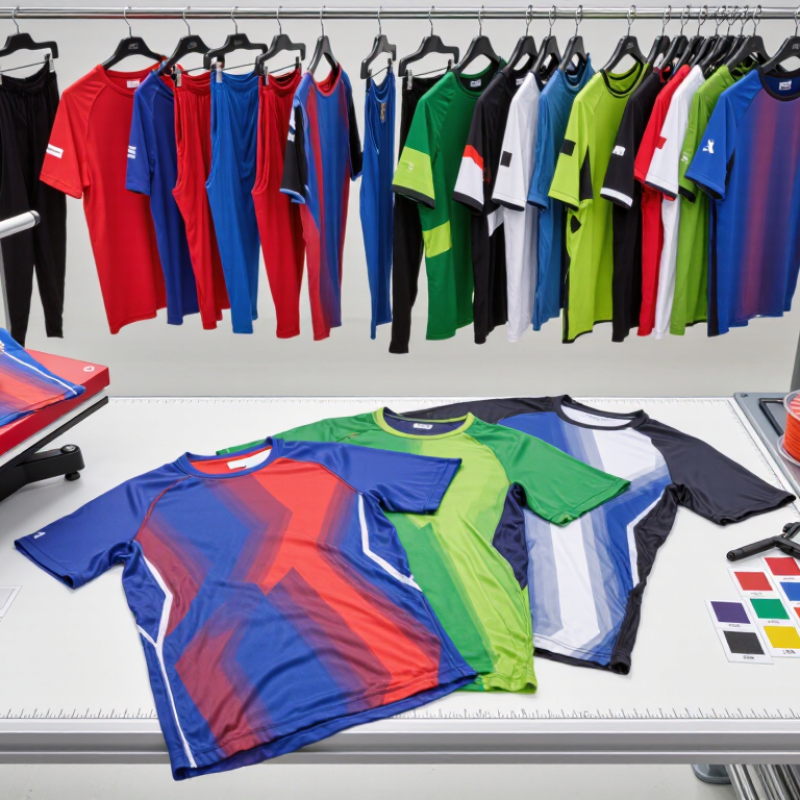
A reliable sublimation sportswear manufacturer understands the process beyond colorful artwork. Dye sublimation uses heat to turn special ink into gas. The gas then enters polyester fibers under controlled pressure. It does not sit as a thick layer on the fabric. This creates a smooth surface that feels light during training and competition. The result can support bright graphics, detailed numbers, and gradual color changes.
The process begins with artwork printed onto transfer paper. A heat press usually reaches about 180–210°C, depending on the fabric and equipment. Heat opens the polyester structure for a short period. Pressure keeps the paper flat against the garment. As the fabric cools, the ink returns to a solid state inside the fibers. The image becomes part of the textile.
Experienced production teams test color, fabric stretch, and print alignment before full production. A white polyester base usually gives the clearest colors. Dark fabrics cannot receive the same bright effect without another printing method. Excessive heat may distort fabric or shift tones. Even experienced technicians sometimes find slight differences between a screen image and the finished garment. That is worth checking, not hiding. Ask for a physical sample, wash test, and measurement review before approving bulk sportswear.
The global sportswear market reached $203.3 billion in 2023, according to GVR. This figure reflects strong demand for performance clothing, team uniforms, and personalized training gear. Buyers now expect comfort, durability, and distinctive designs in one product.
Sublimation printing supports these expectations by placing ink into the fabric fibers. The design feels smooth, rather than sitting heavily on the surface. This helps reduce peeling during repeated washing and active use. Manufacturers can also produce detailed patterns, gradients, numbers, and full-color graphics without bulky layers.
Demand is moving fast. A reliable manufacturer should control fabric selection, color calibration, sizing, stitching, and final inspection. Experienced teams test stretch recovery, print clarity, seam strength, and wash performance before shipping. These checks matter when garments face sweat, friction, sunlight, and frequent laundering.
Small details matter. A breathable polyester fabric may improve comfort during long training sessions. Accurate measurements can reduce returns and improve team consistency. Still, sublimation is not perfect for every fabric or design requirement. Dark base materials can limit color results, and poor artwork preparation may create visible flaws. That assumption deserves review before production begins. Clear samples, documented specifications, and honest communication help buyers make safer decisions in a rapidly expanding market.
Why Choose a Sublimation Sportswear Manufacturer?
In 2023, polyester represented 57% of global fiber output. This figure explains its strong position in performance apparel. Polyester accepts sublimation ink efficiently, allowing sharp graphics and stable color on jerseys. The fabric also dries quickly and resists repeated movement. For athletes, that means less cling during intense training. Small detail. Big difference.
A qualified sublimation sportswear manufacturer should control the process, not only print artwork. Technicians need to check fabric density, ink coverage, heat, pressure, and dwell time. Poor calibration can create faded edges or uneven panels. A reliable factory also tests stretch recovery, wash resistance, seam strength, and color consistency. Ask for production samples. Digital previews can hide real fabric behavior. That is where judgment matters.
Polyester is practical, but it is not automatically perfect. Some recycled fibers may react differently to heat or create a softer print surface. Material selection should match the sport, climate, and expected washing routine. I would question any supplier promising identical results without testing. Manufacturing has variables. Even a good workflow can need adjustment. Clear records, documented approvals, and repeatable inspection make the final order more dependable.
Why Choose a Sublimation Sportswear Manufacturer?
Performance starts with fabric selection and controlled production. The Textile Exchange 2024 Materials Market Report estimates that polyester represented about 57% of global fiber output in 2023. That matters because polyester supports fast drying and stable sublimation printing. During field testing, a well-made polyester jersey can move sweat away from the skin while remaining light during repeated sprints. Breathability still depends on knit structure, fabric weight, and ventilation zones. Printing alone cannot fix a dense fabric.
Colorfastness is another practical advantage. Sublimation bonds dye into polyester fibers instead of leaving a thick surface layer. Graphics usually remain smooth during stretching and washing. AATCC TM61 provides an accelerated laundering method for evaluating color change. Responsible manufacturers should also test color transfer, crocking, and perspiration resistance. Results vary with ink, temperature, pressure, and fabric preparation. That detail is easy to overlook.
No-peel graphics improve comfort and appearance. There is no raised film edge catching on equipment or rubbing the skin. Still, no process is flawless. Poor heat control can create dull colors, ghosting, or uneven coverage. Ask for laboratory reports and production samples before ordering. ASTM D737 air-permeability testing can help compare fabric openness, while wash testing reveals how the garment behaves beyond the first photoshoot. A reliable manufacturer explains these limits clearly and records each production setting.
Choosing a sublimation sportswear manufacturer starts with fabric evidence, not attractive mockups. Request pre-production samples and inspect stretch, opacity, stitching, and color stability. Wash the sample several times. Details matter. A professional supplier should explain fabric weight, ink performance, and heat-transfer settings clearly. In production reviews, I have seen bright designs fade when testing was skipped.
Compliance requires more than a signed declaration. Ask for current material test reports, care-label guidance, and documented quality procedures. The manufacturer should understand applicable textile safety and labeling requirements in your target markets. Request traceable production records when possible. Ask for proof. A vague answer may signal weak control, although it does not always indicate poor workmanship.
Capacity affects consistency. Check monthly output, equipment availability, peak-season planning, and backup arrangements. A factory may accept a large order but struggle with delivery or color matching. That gap matters. Customization also needs practical support, including artwork checks, color-profile advice, panel alignment, size grading, and approval samples. No supplier gets every shade perfect. Even experienced teams can miss a subtle color shift between fabric panels. Clear communication, written specifications, and realistic lead times reduce that risk. A reliable manufacturer admits limitations and offers workable corrections instead of promising everything.
Special ink becomes gas under heat. It enters polyester fibers under pressure. As the garment cools, the ink becomes solid inside the fabric.
The print feels smooth and lightweight. It does not form a thick layer on the surface. This can improve comfort during training.
White polyester usually produces the clearest colors. Polyester also dries quickly and handles repeated movement well. Natural fibers are less suitable.
Yes. It can produce numbers, gradients, patterns, and full-color graphics. Artwork alignment still needs careful checking.
Sublimation ink does not create the same bright effect on dark bases. A different printing method may be more suitable. This needs review.
Request a physical sample, wash test, and measurement review. Check seam strength, stretch recovery, color consistency, and print alignment.
Many heat presses operate around 180–210°C. Exact settings depend on the fabric and equipment. Excessive heat can shift colors or distort panels.
No. It suits polyester and detailed graphics, but not every material or design. Recycled fibers may react differently. Testing prevents confident mistakes.
Choosing a sublimation sportswear manufacturer can help businesses create high-performance apparel with durable, vibrant designs. In the sublimation process, heat transforms ink into a gas that bonds directly with polyester fibers, rather than sitting on the surface. This creates graphics that resist peeling, cracking, and fading while maintaining a lightweight, breathable feel. With the global sportswear market valued at approximately $203.3 billion in 2023 and polyester accounting for about 57% of global fiber output, sublimation remains a practical solution for meeting growing demand for customized athletic clothing.
When selecting a manufacturer, buyers should evaluate fabric quality, color accuracy, production capacity, compliance practices, and customization options. A reliable partner should provide consistent sizing, strong stitching, efficient communication, and the ability to support both small and large orders. By comparing these factors carefully, businesses can develop sportswear that combines comfort, colorfastness, visual appeal, and dependable performance.