Choosing the right OEM sports apparel manufacturer can shape a global brand’s reputation, margins, and customer loyalty. This guide examines suppliers beyond attractive catalog photos. It considers fabric performance, factory capacity, sample accuracy, quality control, ethical production, and communication across time zones. A reliable partner should explain fiber content, stitching density, colorfastness, and testing methods clearly. Vague promises are not enough.
Steve Lamar, President and CEO of the American Apparel & Footwear Association, has emphasized a practical sourcing principle: “Traceability is a journey, not a destination.” That idea fits OEM sports apparel especially well. A running shirt may look simple, yet its moisture-wicking finish, bonded seams, reflective tape, and size grading require controlled processes. Buyers should request factory audits, production samples, inspection records, and realistic delivery schedules. Visiting a facility can reveal details that a video call misses, such as crowded cutting tables or poorly labeled fabric rolls.
This overview compares leading OEM sports apparel manufacturers for global buyers, including their product strengths, customization options, minimum order quantities, certifications, and communication standards. It also considers less visible risks, such as inconsistent batches and rushed approvals. No supplier is perfect. Even experienced buyers can overlook a small label error that affects thousands of garments. Therefore, the strongest recommendations focus on evidence, repeatable quality, and transparent cooperation rather than impressive claims. Some conclusions may remain imperfect, because supplier performance can change with materials, staffing, and market pressure.
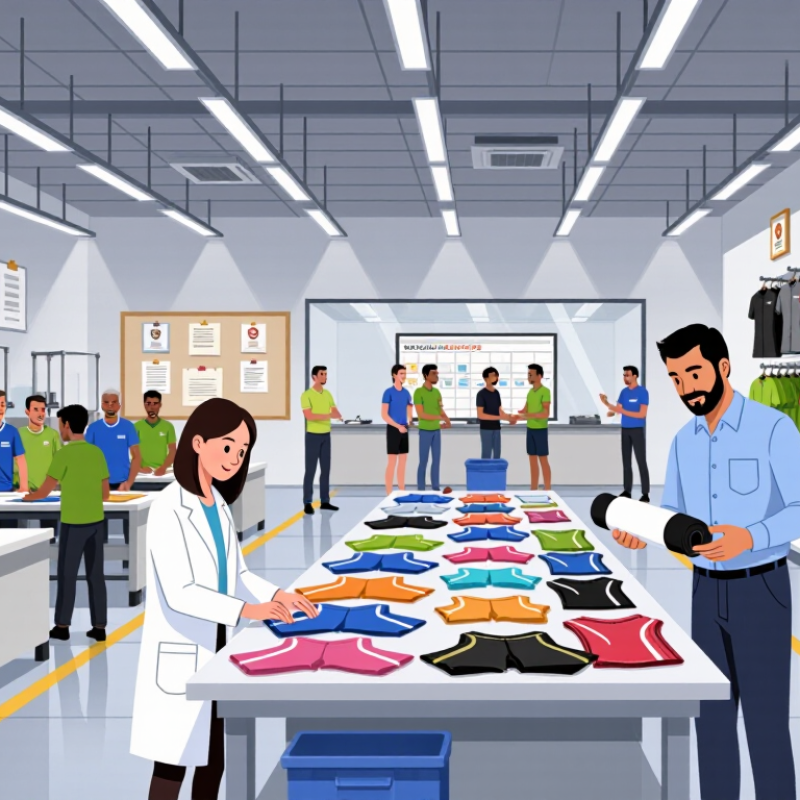
OEM sports apparel manufacturing turns a buyer’s design into a repeatable production system. The process usually begins with a tech pack, fabric selection, size chart, and sample approval. Clear measurements reduce costly corrections later. Fit comes first. A factory should confirm fabric weight, stretch recovery, color standards, stitching, labels, and packaging details before bulk production. Experienced manufacturers also explain minimum order quantities, production timelines, and realistic testing requirements. These conversations reveal whether a supplier understands performance clothing or only basic garment assembly.
Tips: Request a pre-production sample, not just a digital image. Check seam strength, moisture management, zipper movement, and comfort during actual exercise. Keep one approved sample for comparison during inspection. Ask how the factory manages fabric shrinkage and shade variation. Small differences can become large problems across thousands of pieces.
Reliable OEM work depends on documented quality control. In-line inspections can catch skipped stitches, uneven panels, or incorrect measurements before finishing. Final inspections should review appearance, function, carton counts, and labeling accuracy. Production records also support better repeat orders. Still, no process is perfect. A strong sample may hide problems caused by rushed cutting or changing materials. Buyers should question assumptions, record decisions, and allow time for corrections. Trust grows through evidence, not confident promises.
Choosing an OEM sports apparel manufacturer requires more than comparing factory prices. In supplier audits, I examine production records, testing systems, and shipment history. A reliable factory should explain its fabric source, monthly capacity, and quality-control checkpoints clearly.
Textile Exchange’s 2024 Materials Market Report estimated global fiber production at 124 million tonnes in 2023. Polyester represented the largest share. This makes recycled-content claims important, but certificates alone are not enough. Buyers should verify transaction records, mass-balance documents, and laboratory results. The report also noted that recycled polyester remained a limited portion of total polyester production. The gap deserves attention.
Production consistency matters. Ask for pre-production samples, size-set approval, colorfastness tests, and wash-cycle results. ISO 9001-based procedures can indicate process discipline, but they cannot guarantee every shipment. Independent inspections remain useful. I have seen attractive samples fail during bulk production. It happens.
Tips: Compare suppliers using a weighted scorecard. Include defect rates, on-time delivery, audit findings, communication speed, and payment terms. Request two recent production references without relying on polished presentations. Calculate landed cost, not just the quoted unit price. A low quote can become expensive after rework, delays, and unused inventory. Also, challenge vague sustainability language. Ask who tested the fabric, when it was tested, and whether the report matches the actual order.
Leading Regions for Sports Apparel Production
For global buyers, China remains a major OEM hub for sports apparel production. Its factories offer broad material access, advanced knitting equipment, and flexible order capacity. Buyers can source compression tops, training shorts, outer layers, and teamwear within one supply network. Factory experience matters here. Skilled teams often understand fabric recovery, flatlock seams, and moisture management. However, supplier quality varies widely. A polished showroom proves little.
Vietnam has grown strongly in cut-and-sew sportswear, especially for buyers seeking stable export systems and competitive labor costs. Its manufacturers often handle lightweight polyester, recycled blends, and performance uniforms. Bangladesh remains important for larger volume programs, with strong capabilities in basic activewear and knit garments. Lead times can become difficult during peak seasons. Plan early.
Turkey and Portugal serve buyers needing closer European production and shorter transport routes. Turkish factories are experienced with knitted fabrics, dyeing, and quick replenishment. Portuguese manufacturers often provide careful construction and smaller production runs. These advantages may bring higher unit costs. Regional strengths are not guarantees. A factory audit should examine stitching consistency, fabric testing, worker training, and production records. Sample approval also needs patience; early samples can hide problems that appear after washing. A practical sourcing decision should compare total cost, capacity, communication, compliance evidence, and delivery reliability—not only the quoted price.
Top OEM Sports Apparel Manufacturers for Global Buyers
Choosing an OEM sports apparel manufacturer requires more than comparing unit prices. I usually begin with fabric performance, production capacity, and communication quality. Ask whether the factory handles moisture-wicking knits, compression fabrics, flatlock seams, sublimation, and accurate size grading. Request recent samples, not only polished showroom pieces. Inspect stitching, waistband recovery, color consistency, and wash results under normal use.
Capability claims need practical evidence. Ask for monthly capacity, minimum order quantities, sampling timelines, and production lead times in writing. A factory may produce excellent running shirts but struggle with structured outerwear. That difference matters. Review its quality-control process, including fabric inspection, inline checks, needle control, and final measurements. I prefer a small pilot order before approving large production. It costs more initially, but it can expose weak assumptions.
Certifications should be verified, not simply displayed in a PDF. Check the certificate holder, factory address, validity period, covered products, and issuing organization. ISO 9001 may support quality management, while ISO 14001 indicates environmental management practices. OEKO-TEX Standard 100 can help assess harmful-substance testing, and GRS may support recycled-material claims when its scope applies. Ask for recent test reports from qualified laboratories. Documents can be incomplete or outdated. My comparison sheet includes evidence links, audit dates, corrective actions, and responsible contacts. It is not perfect, but it makes vague promises easier to challenge.
Anonymous industry benchmark comparison for evaluating OEM and private-label sportswear suppliers
| Manufacturer Profile | Typical MOQ per Style/Color | Sample Lead Time | Bulk Production Lead Time | Core Product Capabilities | Fabric and Performance Options | Customization Level | Common Compliance Evidence | Best Fit for Buyers |
|---|---|---|---|---|---|---|---|---|
| Small-Batch Development Factory | 50–150 units | 7–14 days | 25–45 days | Leggings, T-shirts, sports bras, shorts, light jackets | Polyester, nylon, elastane blends; moisture management; four-way stretch | High; custom patterns, labels, trims, packaging and colorways | Factory audit, material test reports, social-compliance questionnaire | Startups, test launches and limited collections |
| Mid-Size OEM Sportswear Factory | 300–800 units | 10–18 days | 30–60 days | Full activewear sets, teamwear, running apparel and training wear | Recycled polyester, nylon, elastane, mesh, fleece and quick-dry knits | High; grading, sublimation, screen printing, embroidery and heat transfer | ISO 9001, material testing, factory social audit and restricted-substance controls | Growing labels and regular wholesale programs |
| Large-Scale Cut-and-Sew Manufacturer | 1,000–3,000 units | 14–21 days | 45–75 days | High-volume leggings, tops, outerwear, uniforms and coordinated collections | Engineered knits, compression fabrics, bonded seams, brushed fleece and recycled fibers | Medium to high; strong production control but higher development thresholds | ISO 9001, ISO 14001, WRAP, amfori BSCI or equivalent audit documentation | Established buyers requiring repeatable volume production |
| Technical Performancewear Specialist | 500–2,000 units | 14–28 days | 45–90 days | Compression wear, cycling apparel, trail running gear and technical outer layers | Abrasion-resistant, breathable, water-repellent, anti-odor and thermal fabrics | High; technical construction, reflective details, bonded panels and performance testing | ISO 9001, laboratory performance reports, chemical compliance and traceability records | Outdoor, endurance and performance-focused product lines |
| Sustainable Material-Focused Factory | 500–2,500 units | 14–25 days | 40–80 days | Activewear basics, yoga apparel, athleisure and recycled-fiber collections | Recycled polyester, recycled nylon, organic cotton, regenerated cellulose and low-impact dyes | Medium to high; material selection and documentation are primary strengths | GRS, RCS, GOTS, ISO 14001, transaction certificates and supply-chain records | Buyers with verified sustainability and material-traceability requirements |
| Teamwear and Uniform Producer | 100–500 units | 10–20 days | 30–60 days | Jerseys, tracksuits, training kits, school uniforms and club apparel | Moisture-wicking polyester, mesh, interlock and sublimation-ready fabrics | High; names, numbers, sponsor graphics, team colors and size assortments | ISO 9001, colorfastness tests, size specifications and social-compliance audit | Schools, clubs, events and corporate sports programs |
Top OEM Sports Apparel Manufacturers for Global Buyers
Choosing an OEM sports apparel partner requires evidence, not impressive photographs. Begin with product specifications, target price, delivery window, and expected order volume. Then check whether the factory produces similar garments, such as compression tops, running shorts, or team jackets. Request recent testing records for colorfastness, fabric strength, shrinkage, and restricted substances. A polished factory tour proves little.
Review production capacity and quality controls on the floor. Ask to see cutting plans, inline inspections, needle-control procedures, and final packing checks. Textile Exchange reported that global fiber production reached 124 million tonnes in 2023, with continued growth expected by 2030. This makes material traceability increasingly important. Require fiber composition records and supplier documentation, not vague sustainability claims. The International Labour Organization also emphasizes safe working conditions and responsible purchasing practices across garment supply chains.
Order samples before signing a large contract. Test fit after washing. Test seams under repeated movement. A small pilot order can reveal inconsistent sizing, late replies, or weak carton protection. Compare the approved sample with bulk production through measurable checkpoints. Agree on tolerances, inspection rights, corrective actions, and payment stages in writing. A lower quotation may hide expensive rework. That lesson is easy to ignore. Even experienced buyers can overvalue speed and overlook communication gaps. Reassess the partner after every delivery using defect rates, response time, and on-time performance. Sources: Textile Exchange, Materials Market Report 2024; International Labour Organization, Decent Work in Garment Supply Chains.
This recommended evaluation model prioritizes the factors most commonly used in sports-apparel sourcing: product quality, material performance, production capability, compliance, lead time, minimum order quantity, communication, and total cost. Buyers can assign scores from 1 to 10 for each factor and compare shortlisted OEM partners using the weighted criteria below.
It turns a buyer’s design into repeatable garments. The process includes specifications, fabrics, samples, production, and inspections.
Provide a tech pack, size chart, fabric details, color standards, labels, and packaging instructions. Clear measurements prevent costly corrections.
It shows the actual fabric, fit, seams, zippers, and finishing. Digital images are not enough.
Wear the garment during movement. Check comfort, stretch recovery, seam strength, moisture handling, and fit after washing.
In-line checks can detect skipped stitches, uneven panels, and wrong measurements. Final checks should review appearance, function, labels, and carton counts.
Request similar product examples, testing records, production details, and clear capacity information. A polished factory tour proves little.
It can reveal inconsistent sizing, slow communication, late delivery, or weak packaging. Small batches matter.
Record tolerances, inspection rights, correction steps, payment stages, delivery dates, and approved samples. Verbal promises may be forgotten.
Request fiber composition records and supplier documents. Vague sustainability claims need evidence.
No. Rushed cutting or changed materials can create differences. That assumption deserves review.
Choosing the right OEM sports apparel manufacturer is essential for global buyers seeking reliable quality, flexible production, and competitive pricing. OEM sports apparel manufacturing allows businesses to develop products according to their own designs, materials, sizing standards, and performance requirements. When evaluating suppliers, buyers should review production capacity, fabric and trim options, sample development, quality control procedures, communication efficiency, minimum order quantities, lead times, and relevant certifications. Regional strengths also matter, as different production markets may offer advantages in technical fabrics, skilled workmanship, cost efficiency, or supply chain access.
A practical comparison should examine each manufacturer’s capabilities, customization services, compliance documentation, testing processes, and experience with international orders. Buyers can then follow a structured selection process: define product specifications, create a shortlist, verify facilities and certifications, request samples, assess pricing and timelines, and conduct a small trial order before establishing a long-term partnership. Clear agreements on quality standards, delivery schedules, intellectual property, and communication responsibilities can help create a transparent and dependable OEM relationship.