0%

A strong team kit has to do more than look sharp in a photo. In 2026, teams comparing custom soccer jerseys should weigh fit, fabric, print quality, and ordering support together. A lightweight shirt may feel comfortable during a warm afternoon match, while a durable collar and reinforced seams can matter across a long season. Small details count.

This guide explores what makes a jersey a practical choice for clubs, schools, and recreational teams. It considers customization options, including player names, numbers, colors, and crest placement, alongside sizing consistency and minimum order requirements. Clear proofs and written specifications can help prevent costly surprises. They are worth checking.

No single design suits every squad. A youth team may prioritize easy-care fabric and flexible sizing, while a competitive side may focus on ventilation and reliable replacement orders. Price matters, but the lowest quote does not always offer the best overall value. I would still verify fabric details and sample quality before committing; product descriptions can sound more convincing than the shirt itself. The recommendations ahead use practical criteria rather than appearance alone, so readers can compare options against their team’s needs, budget, and season schedule. That makes the final choice more informed, even if finding a perfect fit takes a little trial and error.
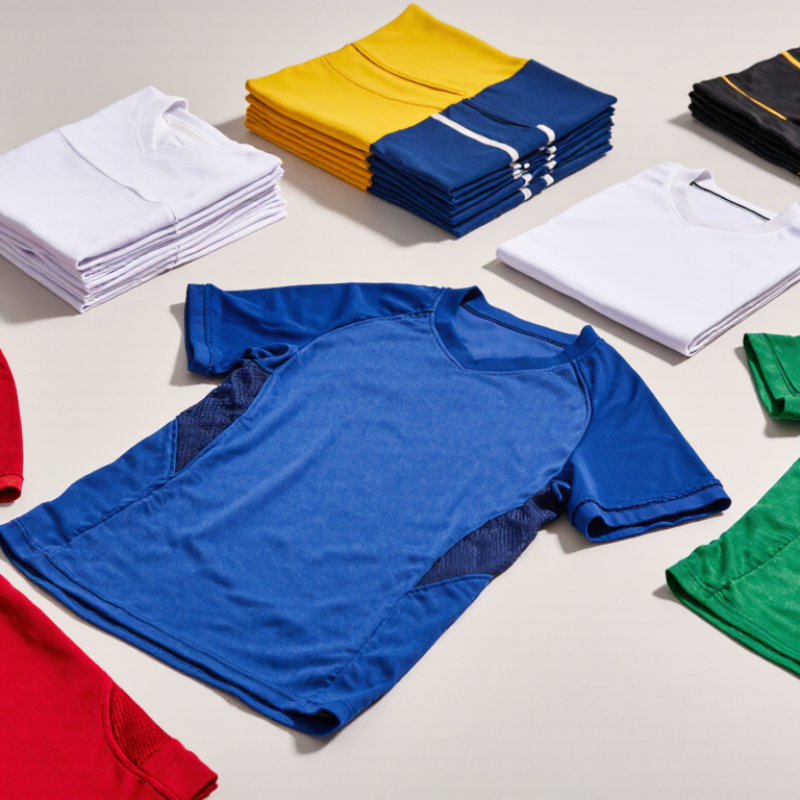
What Are the Top Custom Soccer Jerseys for Teams in 2026?

What Defines a Top Custom Soccer Jersey in 2026?

A top custom soccer jersey in 2026 should feel light during a sprint, stay comfortable under a training bib, and keep its shape after repeated washes. Fit matters. Sleeves should allow a full arm swing, while the hem should remain tucked during quick turns. Teams should check size samples on several players, not just one model. A close fit can look sharp, but it may feel restrictive across different body types.

Fabric choice deserves more than a sustainability slogan. Textile Exchange’s Materials Market Report 2024 estimates that polyester accounted for about 57% of global fiber production in 2023; recycled polyester represented roughly 12% of polyester production. These figures make fiber sourcing a practical question for team buyers. Ask suppliers for material details and care instructions, then test the jersey after washing. A recycled-content claim alone does not prove comfort or durability.

Customization must also survive real use. Names and numbers should stay readable under stadium lights, and seams should not rub at the shoulders. Ask for a sample with the actual printing method and inspect it after several washes. Small flaws show up fast. There is no perfect fabric for every climate; a breathable mesh may suit humid practice, while cooler conditions can call for a denser knit. Teams should compare comfort, construction, and replacement costs—not just the mock-up.

Key Fabrics, Fits, and Performance Features

For a 2026 team kit, fabric choice should match the conditions players actually face. Lightweight polyester dries quickly and usually feels less clingy during repeated sprints. Small mesh panels can improve airflow across the back and underarms. In cool weather, a slightly denser knit may feel more comfortable. Check the fabric in daylight, too; thin areas can become noticeably transparent when stretched. Details matter.

Fit should allow a full stride, overhead reach, and easy shoulder rotation without excess fabric catching on hands. A close athletic cut can reduce flapping, but it should not pull across the chest or restrict breathing. Compare the size chart with a shirt players already wear comfortably, then test samples while moving. Sit, jog, and lift both arms. A jersey that looks sharp standing still may feel wrong after ten minutes.

Performance features are useful only when they solve real problems. Flat seams can reduce rubbing beneath a backpack or goalkeeper’s gloves, while a flexible collar helps avoid pressure around the neck. Reinforced stitching at the shoulders and side seams may handle frequent washing better. Ask how care instructions affect printed numbers and crests, and wash a sample before ordering the full set. I would not assume every “moisture-wicking” claim feels the same; humidity, fit, and personal comfort still vary. Teams sometimes discover that late.

Leading Custom Jersey Styles for Teams in 2026

Leading custom jersey styles for teams in 2026 balance a clear team identity with comfort across different positions. Clean, panelled designs remain practical: contrasting sleeves and side panels make colors easy to recognize without crowding the shirt. For a bolder look, teams can use restrained gradients or tonal patterns, keeping names and numbers legible from the sidelines. Details matter.

Fit deserves equal attention. The Sports & Fitness Industry Association’s 2024 Topline Participation Report says 242.1 million Americans took part in at least one sport or fitness activity in 2023. That broad participation is a useful reminder to offer varied cuts and sizes, rather than assuming one shape suits every player. A mock-up can still mislead. Check samples while moving, especially around the shoulders and hem.

Fabric choices shape both feel and upkeep. Textile Exchange’s Materials Market Report 2024 estimates global fiber production reached 124 million metric tonnes in 2023, with polyester accounting for more than half. For team kits, lightweight, breathable polyester remains a common option; recycled content may also suit a team’s material goals. Ask suppliers to document fabric claims, and test colors after washing. A vivid print looks great on screen, but may not stay vivid in practice.

What Are the Top Custom Soccer Jerseys for Teams in 2026?

Match-season climate can help teams choose a jersey style. This chart shows approximate June average daily high temperatures in selected 2026 FIFA World Cup host cities; it is climate context, not a jersey sales ranking.

For hotter conditions, consider lightweight, breathable fabric and ventilation panels. In cooler cities, teams may prefer a standard-weight jersey that works comfortably with a base layer. Temperature averages are rounded climate normals and do not predict match-day weather.

Climate reference: 1991–2020 normals from NOAA/NCEI and Environment and Climate Change Canada; values shown in °C.

Personalization Options for Team Identity

A custom soccer jersey should make a team recognizable before anyone reads the name. For 2026, start with two or three team colors, then use one as the main shirt color and the others for trim or numbers. Add player names and clear, high-contrast numbering. A small crest on the chest can balance a larger graphic on the back. Keep lettering readable from the sideline; decorative fonts may look exciting on a screen but become difficult to read at match distance. Small choices matter.

Tips: Request a digital proof before approving the full order. Check the number size, spelling, color contrast, and placement on both front and back. If possible, review a sample under daylight, since fabric colors can appear different indoors. Confirm how names and numbers will be applied, and ask whether the design suits the chosen fabric.

Personalization can also help distinguish squads without making every jersey look unrelated. For example, keep the same crest, font, and sleeve detail across the club, then vary a trim color for each age group. Leave enough room around the name and number. Too many badges, slogans, and patterns can compete for attention—and honestly, it is easy to overdesign a shirt when every player has an idea. Invite team feedback, but settle on a simple visual rule before final production.

What Are the Top Custom Soccer Jerseys for Teams in 2026? - Personalization Options for Team Identity

Jersey Option Personalization Choices Best Suited For Practical Considerations Team Identity Potential
Full-Custom Sublimated Jersey Printed colors, gradients, patterns, numbers, names, and team graphics integrated into the fabric design. Clubs and teams seeking a coordinated, distinctive design across the whole kit. Design and production timelines can be longer than for standard stock jerseys. Confirm artwork, sizing, and color proofs before production. High: supports detailed designs and consistent placement of team colors and graphics.
Stock Jersey with Added Names and Numbers Heat-applied or stitched names, squad numbers, and optional badges on an existing jersey design. Teams with shorter lead times, limited budgets, or changing player rosters. Available base colors and styles depend on stock. Check that the decoration method is suitable for the fabric and care instructions. Moderate: player identification is clear, though the base design offers fewer customization choices.
Lightweight Performance Jersey Team colors, player names and numbers, and selected graphics on a lightweight synthetic fabric. Training and match play where low weight and moisture movement are priorities. Polyester is commonly used in performance sportswear. Breathability and feel vary by fabric construction, so review garment specifications and samples. High: performance styling can be combined with team colors and player details.
Recycled-Polyester Jersey Custom color layouts, numbers, names, and team graphics, subject to the decoration and fabric options offered. Teams that want to consider recycled material in their kit selection. Ask for the recycled-content percentage and supporting product documentation. Recycled content alone does not establish a garment's overall environmental impact. Moderate to high: team visuals can remain prominent while material preferences inform the choice.
Long-Sleeve Custom Jersey Personalized front and back, with optional sleeve numbers, badges, or contrasting cuffs. Cooler conditions, goalkeeper kits, or teams that prefer additional arm coverage. Check sleeve length and fit against the team's climate and playing preferences. A separate goalkeeper color may help distinguish the role. High: sleeve details and color blocking provide extra areas for a recognizable team look.
Reversible Training Jersey Two contrasting colorways, with optional numbering or restrained team marks on each side. Practice sessions and small-sided games where teams need quick color changes. Confirm that both sides have suitable visibility and that any decoration does not compromise comfort when reversed. Moderate: two clear color identities are useful for training, though detailed graphics may be limited.
Inclusive-Fit Team Jersey Consistent team colors and graphics across a range of cuts and sizes; names and numbers can be added as needed. Teams aiming to accommodate different body shapes, fit preferences, and age groups. Review the size chart for each cut rather than assuming sizing is identical. Offering fit options can improve comfort and participation. High: a consistent visual identity can be maintained across varied fits and sizes.

Selection note: “Top” describes common customization approaches, not a brand ranking. Actual fabric, decoration methods, sizing, minimum order quantities, and production times vary by supplier and should be confirmed before ordering.

How Teams Can Compare and Choose Custom Jerseys

Comparing custom soccer jerseys in 2026 starts with how your team plays. A youth squad training twice weekly needs different fabric from an adult side playing occasional matches. Request a sample in the intended fabric and size range. Have players sprint, stretch, and raise their arms in it. Fit matters. Check whether seams rub under the arms and whether the hem stays tucked during movement. A jersey that looks sharp on a screen may feel restrictive on the pitch.

Compare fabric weight, breathability, stitching, and print durability together. Lightweight polyester can dry quickly, but the thinnest option may feel less substantial. Ask how numbers and names are applied, then wash a sample according to its care instructions. Look for fading, peeling, or twisting seams. Details count. Also check sizing measurements rather than relying on labels such as “medium”; cuts vary, and one player’s comfortable fit may be another’s loose sleeve.

Before ordering, request a clear written quote covering design setup, minimum quantities, delivery timing, and replacement terms for defects. Confirm that the crest, player names, and numbers match the approved proof. Set a realistic deadline, leaving room for a sizing correction; teams often underestimate this step. Price matters, but the cheapest quote can cost more if replacements arrive after the first match. Compare options against your budget, wash routine, and players’ feedback. A compromise may still be needed, so record why it was chosen.

FAQS

Which fabric works well for an active team kit?

Lightweight polyester dries quickly and can feel less clingy during repeated sprints. Small mesh panels may improve airflow. Comfort still varies.

Should teams choose one fit for every player?

Probably not. Offer varied cuts and sizes, then compare samples with shirts players already wear comfortably.

How can players test a jersey’s fit?

Try a full stride, jog, sit, and lift both arms. Check shoulder rotation and chest comfort. Standing still can mislead.

Which design details help keep jerseys readable?

Contrasting sleeves and side panels make team colors easy to recognize. Restrained gradients can add interest while keeping numbers legible.

What should teams check before ordering printed jerseys?

Wash a sample and inspect its colors, numbers, and crests. Ask how care instructions may affect the prints. Test it first.

Do flat seams and reinforced stitching make a difference?

Flat seams may reduce rubbing beneath gloves or a backpack. Reinforced shoulder and side seams may handle frequent washing better.

Is a moisture-wicking claim enough to judge comfort?

No. Humidity, fit, and personal preference affect how fabric feels. I might be wrong, but a sample tells more.

Can thin fabric become see-through?

Yes, stretched areas may look noticeably transparent. Check the fabric in daylight, especially across the chest and shoulders. Small detail.

Conclusion

In 2026, the best custom soccer jerseys combine lasting comfort, practical performance, and a design that reflects a team’s identity. Lightweight, breathable fabrics can help players stay comfortable through demanding matches, while moisture-managing construction and durable stitching support regular use. A well-considered fit should allow natural movement without feeling restrictive, with options suited to different player preferences and conditions.

Teams can choose from classic, modern, or bold jersey styles, then personalize their kits with colors, numbers, names, and coordinated details. Before making a selection, compare fabric quality, fit, customization choices, durability, and overall value. Gathering input from players and considering how the jerseys will be used can help a team choose a cohesive, practical set of custom soccer jerseys that looks unified on the field and meets its performance needs.

Ethan

Ethan

Ethan is a dedicated marketing professional with a strong understanding of the company’s products, customers, and market opportunities. Through a combination of strategic thinking, industry knowledge, and clear communication, he helps present complex product information in a practical and......