Cut and sew sportswear is built from separate fabric pieces that are cut to a pattern and joined with seams. This method gives designers control over fit, panel placement, and construction details. Unlike seamless knitting, it can accommodate shaped inserts, reinforced areas, and contrasting fabrics. The result depends on more than appearance. Stitch quality, fabric recovery, and seam placement all affect comfort during movement.
Making a garment starts with a design and a size pattern. A manufacturer selects fabric, checks its weight and stretch, then lays it flat for cutting. Panels are cut, matched, and sewn using suitable machines and seam types. A curved seam around a knee or shoulder, for example, needs careful handling to avoid puckering or restricted movement. Samples are usually tested for fit and performance before production continues. Small details matter. A label or seam allowance can irritate skin if placed poorly.
Quality checks may include measuring finished garments, inspecting stitches, and testing stretch or colorfastness. These checks help identify problems, but no process guarantees a perfect fit for every body or activity. Fit is not automatic. Understanding how cut and sew sportswear is designed and made makes it easier to compare construction choices, ask useful supplier questions, and judge whether a garment suits its intended use. Even well-made clothing can need revision; that is part of making better products.
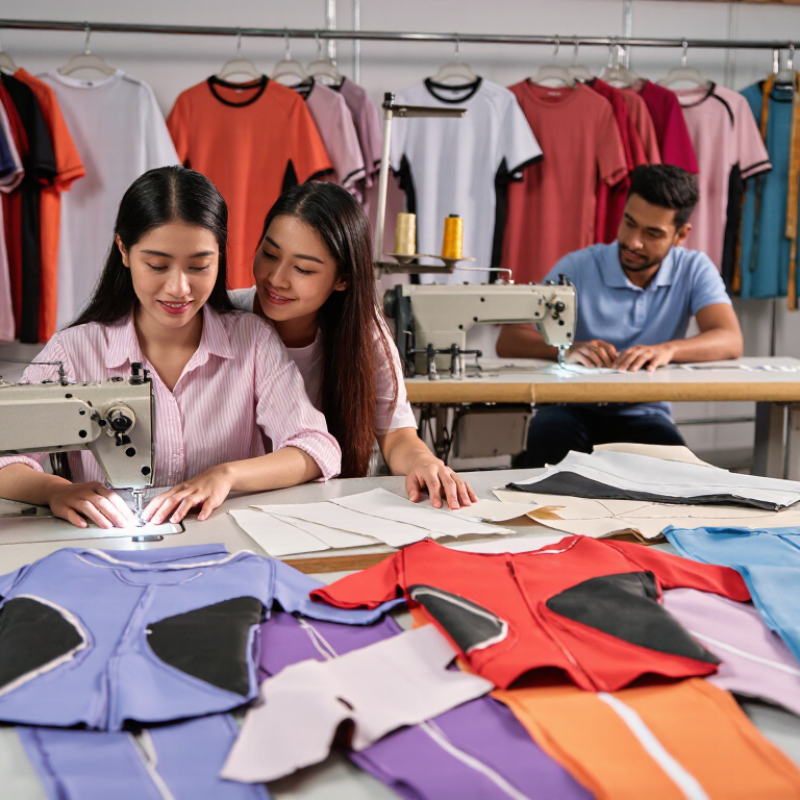
Cut-and-sew sportswear is made by cutting fabric into separate pattern pieces, then stitching those pieces into a finished garment. A running top, for example, may have distinct front and back panels, sleeves, a collar, and reinforced seams. The fabric can be knitted or woven; “cut-and-sew” describes the assembly method, not a specific material. That sounds simple. But small choices—like seam placement or stretch direction—can affect comfort during movement.
Manufacturers usually develop a pattern, make a sample, check its fit, and adjust the pieces before cutting production fabric. Panels are then cut, joined, and finished with details such as hems, pockets, or elastic waistbands. This approach allows specific shaping and design details, though seams can add bulk or cause rubbing if placed poorly. Textile Exchange’s Materials Market Report 2024 estimates that global fiber production reached 124 million tonnes in 2023. That scale makes material selection worth examining: fiber type, fabric construction, and garment design all influence performance and resource use. Cut-and-sew is not automatically better than seamless construction; the right choice depends on the garment’s intended fit, movement, and finish.
Cut-and-sew sportswear is built from fabric panels that are cut to a pattern and stitched together. The main fabric depends on the activity. Polyester and nylon blends are common because they dry relatively quickly and hold their shape. Elastane adds stretch, but too much can make a garment feel restrictive or lose support over time. Fabric weight and knit structure matter, too: a dense knit may offer more coverage, while mesh can improve airflow in areas that trap heat.
Small parts matter. Seams usually use durable thread, with flat or covered stitching often chosen to reduce rubbing against skin. Waistbands may combine elastic with a soft lining, while pockets need reinforcement at stress points. Zippers, drawcords, and modest mesh panels add function, but each can affect comfort and weight. Even a zipper guard can prevent a cold, hard edge from pressing against the body.
Labels, trims, and finishing details also shape the final garment. Care labels need to stay readable without irritating the wearer, and printed transfers can avoid bulky sewn labels. During sampling, makers check stretch, recovery, seam strength, and fit in motion. A fabric may look ideal on a table yet sag at the knee after repeated wear. That’s a useful reminder: material specifications help, but real movement reveals flaws.
A sportswear sketch becomes a garment through measured decisions. A patternmaker turns the design into flat pieces, using body measurements, movement needs, and fabric behavior. A close-fitting top, for example, may need shaped panels, a stable neckline, and room for shoulder rotation. Each piece is marked with grainline, notches, seam allowance, and size. Small errors matter.
The first pattern is tested in sample fabric, then sewn and fitted on a body or dress form. The team checks whether seams twist, hems ride up, or stretch fabric snaps back comfortably. Fit notes guide pattern changes before pieces are graded into other sizes and sent for cutting. This process can be imperfect: a digital pattern may look balanced, yet pull at the knee during a squat. Textile Exchange’s Materials Market Report 2024 estimates global fiber production reached 124 million tonnes in 2023, making careful material planning relevant. The Ellen MacArthur Foundation reported that clothing production doubled from 2000 to 2015, while clothing use fell 36%.
Tips: Test the pattern in the actual fabric, not just a similar one. Mark stretch direction clearly. Keep fitting notes specific: “waistband rolls after bending” helps more than “fit feels off.”
| Stage | What Happens | Key Inputs | Typical Output | Important Checks |
|---|---|---|---|---|
| 1. Design definition | The garment’s silhouette, intended activity, construction details, and fit are specified before pattern development begins. | Design sketches, reference measurements, performance needs, and material preferences | A design brief and initial garment specification | Confirm intended movement, coverage, support, and practical use. |
| 2. Fabric and trim selection | Materials are selected to suit the garment’s function and construction. Stretch garments often use knitted fabrics; woven fabrics may be chosen where greater structure is needed. | Fabric composition, weight, stretch and recovery, color, thread, elastic, closures, and labels | Approved material and trim choices | Check stretch direction, recovery, shrinkage, color consistency, and compatibility with sewing methods. |
| 3. Pattern drafting | A pattern maker converts the design and body measurements into shaped templates, adding construction details such as seam allowances and notches. | Design specification, measurement chart, fabric behavior, and construction plan | Base-size pattern pieces | Check balance, intended ease, seam alignment, grain or stretch direction, and matching notches. |
| 4. Pattern grading | The base pattern is adjusted to create additional sizes. Grading changes dimensions according to a size chart while preserving the garment’s shape and proportions. | Base-size pattern and approved size chart | A graded pattern set | Review size increments and fit across the range; grading is not simply uniform enlargement. |
| 5. Pattern testing and sample sewing | Fabric is cut from the pattern and sewn into a sample so the fit, movement, and construction can be assessed. | Pattern pieces, sample fabric, thread, and construction instructions | A prototype garment and fit notes | Assess fit during relevant movement and check seam comfort, coverage, and fabric recovery. |
| 6. Pattern revision | Pattern and construction details are updated in response to sample fitting and wear-test feedback. | Prototype, measurements, fitting observations, and test results | Revised pattern and updated specifications | Record changes clearly and verify that revisions do not create problems in adjacent sizes. |
| 7. Marker planning and fabric spreading | Pattern pieces are arranged in a marker to plan fabric use. Fabric layers are spread according to the cutting plan and material requirements. | Approved patterns, fabric width, size ratio, and cutting quantity | A marker layout and prepared fabric lay | Observe fabric grain, print direction, nap, stretch direction, defects, and layer alignment. |
| 8. Cutting | Garment pieces are cut from the spread fabric using suitable cutting equipment and the approved marker. | Fabric lay, marker, cutting plan, and cutting equipment | Matched sets of garment components | Check piece shape, edge accuracy, notches, quantity, and alignment through the fabric layers. |
| 9. Sewing and assembly | Cut pieces are joined in a planned sequence. Seam type and stitch settings are selected to suit the fabric, stretch, and garment function. | Cut components, thread, trims, machine settings, and sewing instructions | A constructed garment | Inspect seam strength, stretch, stitch consistency, seam placement, and freedom from skipped stitches. |
| 10. Finishing and final inspection | Garments are finished, measured, and checked against the approved specification before packing. | Completed garment, measurement tolerances, and quality checklist | Inspected, finished garment | Check measurements, appearance, seams, trims, cleanliness, and required labels. |
Cut-and-sew sportswear begins as separate fabric panels, not a finished garment shaped from one piece. A designer’s pattern defines each panel, including sleeves, side sections, waistbands, and pockets. The pattern is adjusted for size and movement before fabric is spread in layers on a cutting table. Grain direction matters. It can affect how a garment stretches and hangs.
A cutting plan helps fit pattern pieces across the fabric while reducing waste. Workers cut the layers with a straight knife or cutting machine, then bundle matching pieces for sewing. Small notches and labels help align panels at the machine. Seams are joined with stitches suited to stretch fabric, such as an overlock stitch. Elastic, zippers, or reflective details may be added at specific steps. The garment is then checked for skipped stitches, uneven seams, and measurements that drift from the pattern. Even careful production can leave minor variations, so fit samples deserve close review.
Tips: Test the fabric and stitch settings on scraps before sewing the full garment. Check seam stretch by gently pulling the sample. Too much tension can pucker fabric; too little can weaken the seam. Keep pieces in order. It saves time. A quick check of labels and notches can prevent a sleeve or waistband from being attached in the wrong direction.
After sewing, sportswear needs careful finishing before it is ready to wear. Trimmers remove loose threads, and inspectors check seam alignment, hems, labels, and surface defects. Fit checks should include squats, arm raises, and running movements, not just a static fitting. Watch for fabric pulling across the shoulders or a waistband rolling during motion. Small details matter.
Textile Exchange’s Materials Market Report 2024 estimates that global fiber production reached 124 million tonnes in 2023. At that scale, durable construction matters: a neat seam is not enough if it opens after repeated stretching or washing. Quality teams can measure garment dimensions, test seam strength, and compare samples before and after laundering. They should also check stretch recovery. Sometimes a sample passes on paper but still feels restrictive.
Fit and durability affect how long people keep wearing a garment. WRAP’s 2012 Valuing Our Clothes report estimated that extending clothing use by nine months could reduce its carbon, water, and waste footprints by around 20–30% each. That makes wash testing and realistic movement trials worthwhile. Still, inspection has limits; fabric batches can behave differently, and one fitting session may miss a problem that appears after several wears.
Polyester and nylon blends dry relatively quickly and hold their shape. Elastane adds stretch, but too much may feel restrictive.
Dense knits can provide more coverage. Mesh panels may improve airflow where heat builds up, such as under the arms.
Flat or covered seams can feel smoother against skin. A zipper guard also keeps a hard edge from pressing against the body.
A patternmaker uses body measurements, movement needs, and fabric behavior to create flat garment pieces. Each piece gets marks for seams and alignment.
Similar fabrics can stretch and recover differently. A top may look balanced on a table but pull at the shoulder during movement.
Pattern pieces are arranged across layered fabric to plan the cuts and limit waste. Grain direction matters; it can change how panels hang.
Workers bundle matching pieces and use notches or labels as guides. A misplaced waistband can still happen, so a quick check helps.
They can sew a scrap sample and gently pull it. Too much tension may pucker the fabric; too little can weaken the seam.
Look for skipped stitches, uneven seams, and measurements that differ from the pattern. Minor variations happen. They still deserve attention.
Cut and sew sportswear is made by assembling separate pieces of fabric into a finished garment, rather than shaping the garment from a single piece of material. The process begins with choosing suitable fabrics and components, such as stretch textiles, thread, elastic, zippers, or other closures. Each choice affects how the sportswear feels, fits, and performs during movement.
A design is then translated into patterns, which guide the shape and size of each garment piece. The fabric is laid out, marked, and cut according to those patterns before the pieces are joined with carefully planned seams. Finally, the garment is finished and checked for fit, comfort, construction, and consistency. These steps help turn a design concept into practical sportswear that is comfortable, durable, and suited to its intended use.