Choosing the best seamless workout leggings starts with a simple question: how should they feel during movement? A waistband may feel secure while standing, then roll during a squat. Fabric can look opaque in a mirror but turn sheer under bright studio lights. These details matter more than a polished product photo.
The market is growing, but the available figures need context. Grand View Research valued the global activewear market at US$319.4 billion in 2022 and forecast 9.3% annual growth through 2030. That figure covers activewear broadly; it does not measure seamless workout leggings alone. Still, it shows why brands are competing for attention—and why shoppers need practical criteria, not just trend claims. Small details matter.
Fit also deserves a closer look. Exercise physiologist Dr. Stacy Sims, known for her work on women’s sport, writes, “Women are not small men.” Her point is broader than leggings, but it reminds us that bodies and training needs vary. A single compression level or rise will not suit everyone. Seamless construction can reduce bulky stitching, yet it does not guarantee comfort, support, or durability. Some leggings may stretch smoothly but feel warm during a long run. Others may stay put in a yoga class but pinch at the waist. This guide looks at fabric, fit, opacity, construction, and care, so you can compare options against your own workouts. A size chart helps, though it can still mislead. Try to judge the garment in motion, not only at the fitting-room mirror.
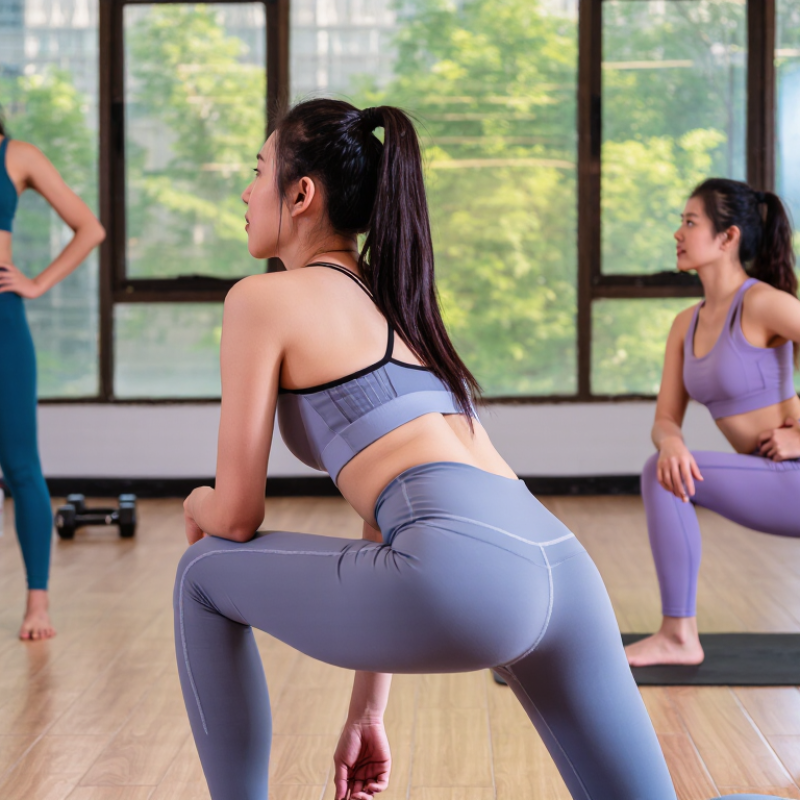
Seamless workout leggings are usually made on circular knitting machines, which form a tube of fabric rather than separate front and back panels. The machine changes stitch structure to shape areas such as the waistband, hips, and knees. Some designs still need a gusset or a small number of joining seams. “Seamless” does not always mean seam-free. Yarn is commonly a blend of nylon or polyester with elastane, while knit density affects opacity, stretch, and support. A close, firm knit can feel secure, but may also feel warm during a long class.
Material choice matters, too. Textile Exchange’s Materials Market Report 2024 estimates that global fiber production reached 124 million tonnes in 2023, with polyester accounting for about 57 percent. That figure describes the wider textile industry, not leggings alone. It is useful context when checking a product’s fiber content, but it does not tell you how durable or comfortable a particular fabric will be. Touch the inside surface, stretch the fabric in both directions, and check whether it turns sheer under tension. That matters. A smooth finish can hide weak recovery, and photos rarely show that. I would also inspect the waistband after repeated stretching; a well-made knit should return close to its original shape, though fit and personal comfort remain imperfectly predictable.
Choose seamless leggings by movement, not by the word “seamless.” The ACSM’s 2025 Worldwide Fitness Trends survey ranked functional fitness seventh and HIIT ninth. Both involve varied, high-movement exercise. For squats, lunges, and circuits, look for four-way stretch, a stable waistband, and fabric that recovers without sagging. Try a deep squat under bright light; opacity can vary with fabric, fit, and wear. Seamless construction may reduce bulky side seams, but it cannot guarantee a chafe-free fit. Small details matter.
For yoga or Pilates, prioritize a soft feel and controlled stretch, so fabric follows slow folds without pulling at the knees.
For running, choose a secure waistband and moisture-managing fabric; check that pockets hold essentials without bouncing. Dense fabric may feel supportive during lifting, but compression is personal, not a measure of performance. A standing-only fitting test is flawed: repeated hip hinges can make a waistband roll. It’s easy to miss.
Tips: Try your leggings with the movements you actually do. Check for sheerness, slipping, and fabric that pinches behind the knees. If one feature feels restrictive, reconsider the fit; “supportive” should not mean uncomfortable.
Start with the fabric, but do not choose by softness alone. A brushed knit may feel cozy, yet it can trap heat during a hard session. Check the label for fiber content, stretch, and care instructions. Textile Exchange’s Materials Market Report 2024 estimates that polyester made up 57% of global fiber production in 2023. That figure reflects the wider textile market, not leggings specifically, but it shows how common polyester is. Nylon blends can feel smooth and resilient; elastane helps fabric recover after stretching. Small details matter. I still find that a fabric can feel supportive in a shop and warmer than expected during a workout.
Fit is easier to judge in motion. Squat, hinge, and take a few long strides. The waistband should stay put without digging in, while fabric should not go sheer across the hips. Support should feel secure, not restrictive. Seams—or seamless knit zones—should lie flat where your body bends, especially behind the knees and at the inner thighs. Check whether the fabric snaps back after a gentle stretch. If it stays baggy, that may become noticeable after repeated wear. One caveat: “seamless” does not mean every garment has no seams. Look closely at the waistband and gusset, then decide whether the pressure feels comfortable after several minutes, not just one quick try.
| Evaluation Dimension | What to Check | Useful Signs | Potential Cautions |
|---|---|---|---|
| Fabric composition | Check the garment label for the fiber blend. Seamless leggings commonly use nylon or polyester blended with elastane. | Nylon blends often feel smooth; polyester blends are commonly used for durable, quick-drying activewear. Elastane adds stretch and recovery. | Fiber content alone does not determine comfort, opacity, or quality. Compare the fabric in person or check care and product details. |
| Stretch and recovery | Gently stretch the fabric in more than one direction, then see whether it returns to its original shape. | The material should move with the body and recover without feeling slack after stretching. | Too little stretch can restrict movement; excessive tightness may feel uncomfortable. Elastane percentage alone does not predict fit. |
| Opacity | Try a squat or forward bend in bright lighting, ideally with the same type of underwear you plan to wear. | The fabric remains sufficiently opaque through the range of motion you expect to use. | Opacity can vary with size, stretch, lighting, and fabric color. A static fitting-room check may not reveal sheerness during movement. |
| Waistband fit | Check whether the waistband sits comfortably and stays in place while walking, squatting, and bending. | A secure, even fit that does not dig in, roll, or require frequent adjustment. | A very tight waistband is not necessarily more supportive. If it causes pinching or restricts breathing, try another size or cut. |
| Leg fit and length | Check for comfortable coverage through the hips, thighs, knees, and ankles in your usual movements. | The leggings stay in place without excessive bunching or pulling at the crotch, knees, or hems. | Length and fit vary by body proportions and garment design. Use the size chart and check the return policy when shopping online. |
| Support and compression | Assess how firmly the fabric holds the body during your intended activity, such as yoga, strength training, or running. | Choose a level that feels secure while still allowing comfortable breathing and full movement. | Compression is affected by knit construction, pattern, and sizing—not just fiber content. “More compression” is not automatically better. |
| Seamless construction | Inspect the knit zones, waistband, and any remaining seams or gusset construction. | Fewer prominent seams may reduce rubbing for some wearers; different knit zones can provide varied stretch or coverage. | “Seamless” does not always mean completely seam-free. Check for pressure points and chafing during movement. |
| Moisture and care | Review the care label and consider how quickly the fabric dries after a workout. | A care routine that suits your needs and a fabric that feels comfortable when warm or damp. | Drying performance varies by fabric and construction. Follow the garment’s care instructions to help preserve stretch and fit. |
When choosing seamless workout leggings, inspect the knit, not just the smooth finish. Check that the gusset lies flat and the fabric has no thin patches, loose loops, or uneven transitions around the inner thighs. ASTM D2594 evaluates stretch and growth in knitted fabrics, useful measures when comparing how a fabric may respond to repeated movement. A label alone cannot tell you how well a garment will recover after wear.
Coverage needs a practical check. Bend, squat, and stretch in bright, even light; look for visible skin or sudden color change across the seat and knees. Light matters. Fit and fabric color can affect what you see, so this test is helpful, not definitive.
Textile Exchange’s Materials Market Report 2024 estimates global fiber production at 124 million tonnes in 2023, with polyester making up 57 percent. That scale is context, not proof that any polyester blend is durable.
Check care instructions and inspect stitching after washing. AATCC TM135 provides a standard method for measuring dimensional changes after home laundering. Seams can still twist or fabric can pill, even when it passes a test.
A little imperfect. Try the leggings through several movements before deciding.
Comparing seamless workout leggings is easier when you judge the same details across each pair, rather than trusting a soft first impression. Start with intended use: low-impact sessions, strength training, and running place different demands on stretch and hold. For lifting, try a deep squat and a forward lunge; the fabric should move without pulling sharply at the knees. Check the mirror.
Then compare the waistband, rise, and fabric weight. A wide waistband may feel steady, but it should not roll when you bend or breathe deeply. Lightweight fabric can feel cool, yet may show more under bright light or when stretched. Look for even coverage in a squat, and check whether the knit returns to shape after a gentle tug. Seamless does not mean friction-free. Notice any inner-thigh rubbing, especially if you plan longer walks or sweaty workouts.
Compare the size chart with your waist and hip measurements, then check the return terms before buying. If you fall between sizes, consider whether you prefer compression or easier movement; neither is automatically better. I sometimes overlook pocket placement until a phone shifts during a jog, so test that detail too. Small details matter. One pair may look sleek but feel restrictive after ten minutes; another may feel less sculpted but stay comfortable through a full session. Try them at home.
Compare common example fabric blends to find a balance of support and stretch that suits your workout.
These are illustrative blend compositions, not product or market averages. Higher elastane content generally allows more stretch, while nylon makes up the main fabric in each example. Check garment labels and fit details, since fabric performance also depends on construction and knit.
Circular knitting forms a fabric tube instead of separate front and back panels. Some pairs still have a gusset or small joining seams. Not seam-free.
Check the fiber content, knit density, and stretch recovery. Stretch the fabric both ways and see whether it turns sheer. Photos can hide weak recovery.
Try a deep squat under bright light. Look for sheerness while the fabric is stretched. Lighting and fit can change what you see.
Look for four-way stretch, a stable waistband, and fabric that recovers after movement. Test a squat and lunge. No standing-only test.
Choose a soft feel and controlled stretch. The fabric should follow slow folds without pulling at your knees. Comfort is personal.
Check that the waistband stays secure and the fabric manages moisture. Put essentials in the pockets and jog briefly. A phone can shift.
Bend and breathe deeply to see if the waistband rolls. Lightweight fabric may feel cool but show more under bright light. Trade-offs happen.
Compare your waist and hip measurements with the size chart. Consider whether you prefer compression or easier movement; neither is automatically better. Try them at home.
Choosing the best seamless workout leggings starts with understanding how their knitted construction creates a smooth feel and reduces bulky seams. Consider the activities you do most often, since different workouts may call for different levels of stretch, compression, breathability, and flexibility. The right pair should feel secure without restricting movement or causing discomfort.
Compare fabric softness, moisture management, waistband fit, and overall support, then check coverage during bends and stretches. Examine the stitching, knit structure, and fabric resilience to judge how well the leggings may hold their shape with regular wear and washing. Finally, weigh comfort, function, durability, and price together rather than choosing by appearance alone. By matching these details to your needs, you can select seamless workout leggings that feel comfortable and provide dependable performance across your routine.