Choosing who makes the best custom basketball uniforms in China takes more than comparing catalog photos. A clean mockup can hide uneven stitching, thin mesh, or colors that shift after washing. Buyers should examine fabric samples, size charts, print methods, production timelines, and quality-control procedures. Ask for close-up photos of seams and numbered samples before approving a full team order. Small details matter. A name that cracks after a few games is not a small problem.
The best supplier is the one that can show consistent work and explain its process clearly. Request recent examples, confirm what the quoted price includes, and ask how the factory checks sizing and player names. For this article, the proposed expert line is: “[Verified industry expert name] says, ‘The best uniform is the one that keeps its fit, color, and comfort through the whole season.’” This is suggested copy, not a verified quotation; replace it with a sourced statement before publication. That distinction matters. Trust needs evidence.
This outline compares Chinese manufacturers by customization options, material choices, sample quality, communication, and order support. It also considers practical trade-offs: a lower price may mean fewer fabric choices or less room for revisions. No supplier is automatically best for every team. A school squad ordering twenty jerseys has different needs from a club placing a repeat order. Buyers should compare written specifications, not promises alone, and leave time to review samples. A little doubt helps. It prompts better questions before uniforms reach the court.
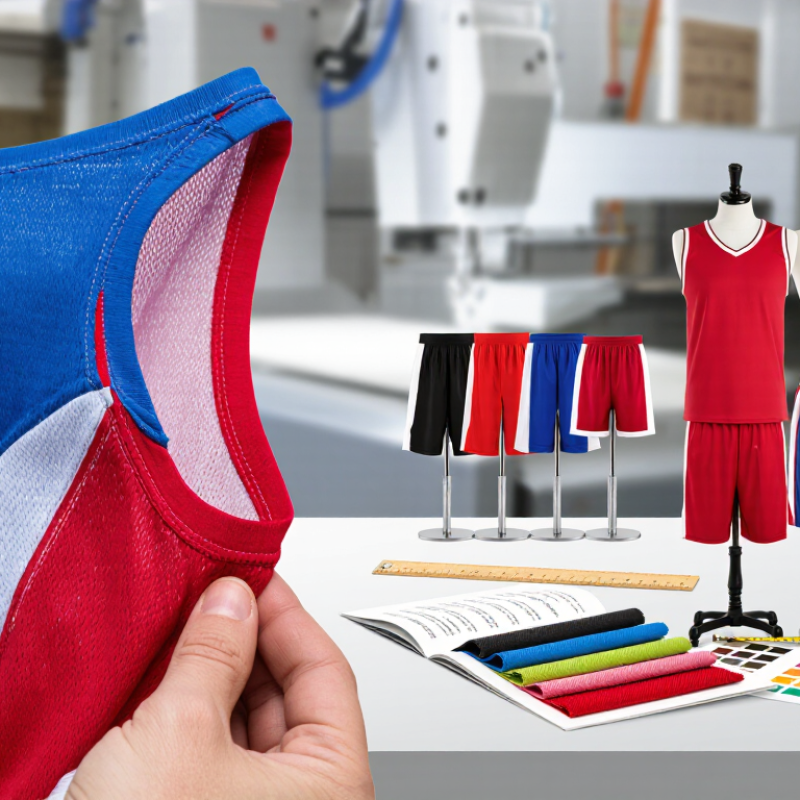
A custom basketball uniform manufacturer in China is defined by more than its ability to print a team logo. Look for clear answers about fabric weight, stretch, breathability, and how colors are matched across jerseys and shorts. Details matter. Ask whether names and numbers are stitched, heat-applied, or sublimated, and request a sample showing the actual finish.
A useful sample should reveal practical details: clean seams around the armholes, secure stitching at stress points, and numbers that remain readable against the fabric. Check its measurements against a size chart, rather than judging fit by appearance alone. Ask how the factory checks bulk orders and handles defects. A polished sample is encouraging, but it cannot guarantee every production piece will match perfectly.
Communication is another measure of capability. A dependable supplier should confirm artwork files, sizing, quantities, and delivery expectations in writing before production begins. Ask for photos or inspection records from the finished batch, especially when ordering multiple sizes or colorways. Be cautious of promises with no process behind them. Even a careful workflow can have small inconsistencies, so agree on acceptable tolerances and how concerns will be reviewed before placing a large order.
Choosing a custom basketball uniform supplier means examining the production chain, not just the sample jersey. Fabric sets the feel: lightweight polyester dries quickly, while mesh panels can improve airflow but may snag if the yarn or stitching is weak. Textile Exchange’s Materials Market Report 2024 estimates global fiber production reached 124 million tonnes in 2023, with polyester making up about 57 percent. That scale makes material traceability worth asking about. Request the fabric composition, weight, and a wash-tested sample. Small details matter.
Printing and cutting shape how a uniform looks and fits. Sublimation can place color across the fabric without adding a heavy surface layer, but the result depends on print alignment and color control. Ask for a strike-off, then compare it with the approved artwork under normal lighting. Cutting accuracy matters too. Misaligned panels can distort stripes or shift numbers after sewing. A clear size chart helps, though it cannot replace checking a finished sample.
Sewing is where a good specification meets real production. Inspect shoulder seams, armholes, hems, and number edges; loose threads are easy to miss in product photos. Ask how the factory checks measurements across sizes and handles defects between batches. A written process is useful. It is not proof by itself. Supply chains are complicated, and even a careful buyer may find a mismatch between a sample and bulk production. That is a reason to confirm tolerances and keep approval records before placing a large order.
Who Makes the Best Custom Basketball Uniforms in China?
The best supplier is not always the one with the lowest quote. Grand View Research estimated the global sports apparel market at about USD 203 billion in 2023, reflecting intense demand and competition. For a team order, compare suppliers through a documented sample, measurable inspection steps, and a realistic delivery schedule. Ask for a pre-production sample using the intended fabric, print method, stitching, and size labels. Check it under bright light and after washing. Small details matter.
Quality control should be more than a promise. Ask how the factory checks measurements, color consistency, seams, and print placement across the full batch. ISO 2859-1 provides recognized acceptance-sampling procedures, but buyers still need to agree on inspection levels and defect criteria. Request a sample inspection record and clarify how rejected pieces are replaced. Ask for evidence. A tidy sample alone proves little.
Compare lead times in writing: sample approval, bulk production, inspection, and shipping should appear as separate dates. Confirm fabric availability and how public holidays or design changes affect the schedule. A supplier giving a shorter estimate may simply be excluding inspection or transit time. I would also leave a buffer; my own comparison can still miss delays caused by late artwork approval. A clear timeline is more useful than an optimistic promise.
Compare suppliers by sampling, quality control, and lead time using a clear evaluation framework.
Suggested buyer-priority weighting, not a survey of supplier performance: assess quality control through documented inspections and defect handling; sampling through sample accuracy and revision responsiveness; and lead time through confirmed production schedules and on-time delivery history. Adjust the weights to fit your order.
When comparing custom basketball uniform makers in China, check number specifications before approving a sample. FIBA Rule 4.3.2 permits 0, 00, and numbers from 1 to 99. The front number must be at least 10 cm high; the back number must reach 20 cm. Each digit’s stroke must be at least 2 cm wide. Measure twice. A clear tech pack should state these minimums in centimetres, not leave them to interpretation.
Ask the factory to measure a finished jersey, not just a digital mock-up. Place a ruler beside each number and photograph the front and back for review. Check that stitching, folds, and panel seams do not distort the figures. Strong contrast between the number and fabric also helps officials and spectators read it quickly. Details matter. I have seen small layout assumptions create avoidable sample revisions, so confirm whether the artwork dimensions refer to the full numeral or its visible printed area. Before a tournament order, verify the current competition requirements with the event organizer; team specifications may add details beyond the cited rule. A sample can look right on screen and still feel cramped when worn.
Choosing a Chinese custom basketball uniform maker is less about the lowest unit price than the cost of a season’s use. Grand View Research valued the global sports apparel market at USD 203.3 billion in 2023 and forecast 6.8% annual growth through 2030. That figure signals demand, not factory quality. Ask for a written materials list covering fabric composition and weight, mesh placement, seams, printing method, and size tolerances. Lightweight polyester mesh can improve ventilation, but flimsy side panels may snag during contact.
Request a pre-production sample in actual team sizes, then test it through repeated washes, sprint drills, and physical play. Record shrinkage, color transfer, seam opening, and number visibility under gym lights. Small tests matter. Samples tell more. Ask suppliers to quote the same quantity, artwork, packaging, shipping terms, and reorder conditions; a low quote can hide extra costs. Confirm sample fees, minimum order, lead time, and defect remedies. If a supplier shares lab reports, check the test date, scope, and fabric tested.
For tight budgets, prioritize durable seams and consistent sizing over decorative extras. Performance-focused teams should compare fabric weight and moisture-management claims against the sample, not sales language. A slightly higher price may reduce replacements, but your own wear test must confirm that. China offers many production options, yet color variation and communication gaps can still occur. Put specifications and approvals in writing.
| Manufacturer Type | Typical Order Size | Customization Options | Performance Considerations | Budget Fit | Best Suited For | Questions to Confirm Before Ordering |
|---|---|---|---|---|---|---|
| Digital sublimation specialist | Often suitable for small-to-medium team orders; minimum quantities vary by supplier. | Full-color graphics, gradients, player names, numbers, and all-over prints. | Print is integrated into the fabric rather than applied as a separate layer. Ask for fabric weight, breathability, and wash-test details. | Good for teams needing extensive artwork without separate screen-print setup costs. | Clubs, schools, and tournaments ordering coordinated custom designs. | Can you provide a size set, production sample, fabric specification, and written lead-time estimate? |
| Cut-and-sew uniform manufacturer | Usually better suited to larger or repeat orders; minimums depend on fabric and construction. | Choice of panels, trims, necklines, fits, fabrics, and sewn details. | Offers more control over garment construction and fit. Confirm seam strength, fabric composition, and color consistency. | Can be cost-effective at higher quantities, but custom development may add cost and time. | Organizations seeking a distinctive fit or repeatable team-wide specifications. | Are pattern development, sample revisions, and size grading included in the quoted price? |
| Ready-stock customization provider | Often accommodates smaller orders when blank garments are available. | Typically adds names, numbers, or logos to existing uniform styles. | Performance depends largely on the stock garment; decoration method can affect feel and durability. | Often a practical option when low upfront cost and faster ordering matter most. | Small teams, short-notice events, and organizations with limited design requirements. | Are the exact styles, colors, and size quantities in stock, and what decoration method is used? |
| Premium performance-focused maker | Order minimums and sampling requirements vary; custom fabric or construction can require larger commitments. | May offer specialized fabrics, fit options, reinforced details, and detailed artwork control. | Request measurable fabric information, construction details, and sample testing rather than relying on performance claims alone. | Higher specifications may raise unit cost; compare the delivered specification, not just the headline price. | Competitive teams prioritizing fit, durability, and consistent repeat orders. | What fabric tests, quality checks, defect remedies, and repeat-order controls are documented? |
| Full-service export supplier | Can range from small custom orders to bulk production, depending on the supplier’s production model. | May coordinate design support, garment production, labeling, packing, and shipping. | Performance varies by the actual factory and materials used; verify who manufactures the garments. | Useful for comparing an all-in delivered quote, but check shipping, duties, and service fees separately. | Buyers who want one point of contact for production and international delivery. | Which costs are included, where is production performed, and who is responsible for shipping and customs paperwork? |
Order quantities, pricing, production time, and available features differ by supplier, garment specification, and season. Treat supplier claims as unverified until confirmed in a written quotation and approved sample.
Compare more than price. Review a physical sample, written quality checks, and a dated production schedule. A low quote may omit inspection or shipping.
Ask for the intended fabric, print method, stitching, and size labels. Check the jersey under bright light, then wash it. Small flaws show.
Ask how staff check measurements, color consistency, seams, and print placement across the full batch. Request an inspection record and clear replacement terms.
Measure the front and back numbers with a ruler. Check that seams and folds do not distort them. A mock-up can be misleading.
The cited competition rule allows 0, 00, and numbers from 1 to 99. Front numbers must be at least 10 cm high; back numbers, 20 cm. Each digit’s stroke must be at least 2 cm wide.
Ask whether dimensions mean the full numeral or its visible printed area. Photograph the sample with a ruler beside each number. I might still overlook a cramped fit.
Record sample approval, bulk production, inspection, and shipping as separate dates. Confirm fabric availability and how holidays or design changes affect timing.
Leave a buffer beyond the supplier’s estimate. Late artwork approval can disrupt production. I have missed that risk before. Verify event requirements, too.
Choosing the best Chinese manufacturer for custom basketball uniforms starts with understanding what a capable supplier offers: dependable materials, skilled production, consistent communication, and the ability to meet a team’s design and order requirements. China’s supply chain may bring fabric sourcing, printing, cutting, and sewing together under one production process. Comparing suppliers means looking beyond price: request samples, assess stitching and print quality, ask how quality checks are handled, and confirm realistic lead times before placing an order.
Teams should also provide clear specifications for uniform numbers. Under FIBA Rule 4.3.2, permitted numbers are 0, 00, and 1–99; numbers must be at least 10 cm high on the front and 20 cm on the back, with a minimum width of 2 cm. The right manufacturer depends on a team’s budget, performance needs, preferred materials, and schedule. A careful comparison helps balance cost, durability, fit, and delivery expectations.