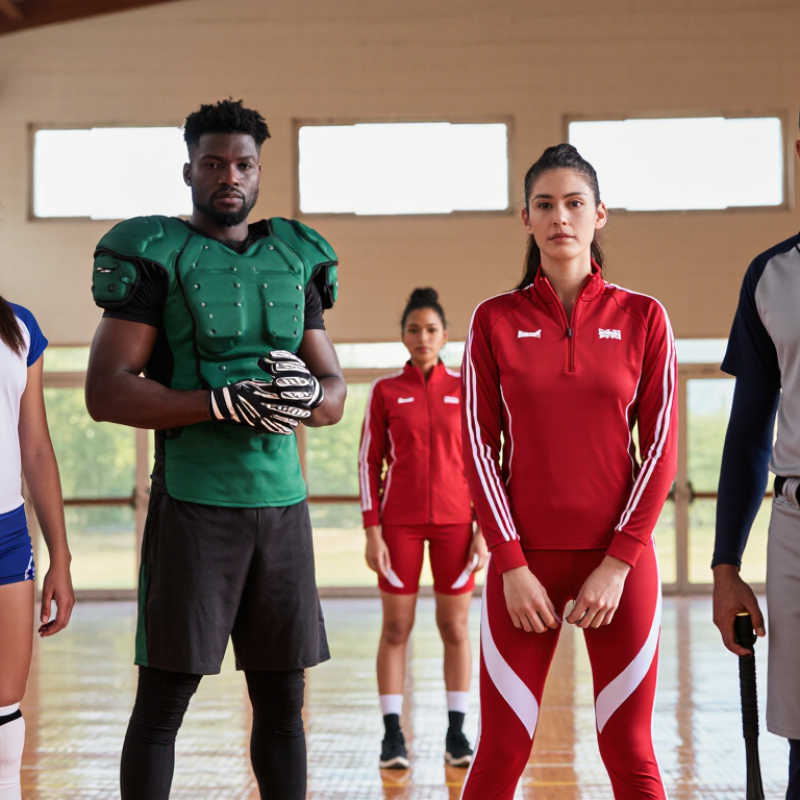
Choosing custom sports uniforms is more than selecting attractive colors and adding a team logo. The right uniform must support movement, comfort, durability, identity, and practical team needs. A volleyball player needs fabric that stays light during repeated jumps. A football player needs reinforced areas that can withstand contact. Small design decisions matter during a long season.
Teamwear consultant Kit Jones explains, “A uniform must serve the athlete before it serves the camera.” That principle is easy to overlook. Bright graphics may look impressive online, but poor ventilation can make a jersey uncomfortable within minutes. A reliable selection process considers fabric weight, stitching, sizing accuracy, printing quality, washing instructions, and delivery timing. It also checks whether the supplier can reproduce the same colors for future replacements.
Budget matters too. The cheapest quotation may hide limited sizing, weak seams, or expensive revisions. Yet premium pricing does not automatically guarantee better performance. Ask for samples. Test them.
This guide presents seven practical tips for choosing custom sports uniforms with greater confidence. It explores fit, fabric, personalization, team branding, supplier communication, and long-term value. Some recommendations may seem obvious, but teams often miss them when deadlines become tight. I have also included details worth questioning, because no uniform works perfectly for every sport, body type, climate, or playing level. A thoughtful choice may not look dramatic at first. It should feel dependable when the match becomes difficult.
7 Tips for Choosing Custom Sports Uniforms
Define your team’s sport, needs, and uniform requirements before selecting colors or graphics. The NFHS 2022-23 High School Athletics Participation Survey recorded more than 7.8 million student-athletes in the United States. That scale highlights a practical issue: uniforms must fit different bodies, positions, and movement patterns. A basketball kit needs flexible armholes and breathable panels. A rugby uniform needs stronger seams and a secure fit. Ask coaches about contact, weather, playing surfaces, and washing frequency.
List seven requirements: sport-specific mobility, accurate sizing, moisture management, fabric strength, legal markings, replacement access, and budget. Measure players wearing their usual base layers. Keep a sample uniform for sprinting, reaching, and sitting. Small discomfort becomes obvious during competition. It is easy to overvalue appearance. That mistake costs money. The Textile Exchange 2024 Materials Market Report states that polyester represented about 59% of global fiber production in 2023. Polyester can dry quickly, but recycled content, fabric weight, and finishing still affect comfort and durability.
Check local competition rules before approving numbers, colors, and sponsor space. Keep a written size chart and record each athlete’s measurements. Plan for late roster changes, too. A two-season replacement option may matter more than a slightly lower first price. I have seen teams choose bright designs that looked impressive online but showed sweat marks under stadium lights. That detail should not be ignored. Uniform decisions improve when athletes test samples, wash them repeatedly, and give honest feedback before production.
| Tip | Sport and Activity | Primary Team Need | Recommended Uniform Requirements | Practical Check |
|---|---|---|---|---|
| 1. Define the sport first | Soccer, rugby, field hockey, basketball, volleyball, or running | Match the uniform to the sport’s movement, contact level, and playing environment. | Choose sport-specific cuts, appropriate coverage, reinforced seams where needed, and materials suitable for indoor or outdoor use. | List the sport, competition format, playing surface, season, and training conditions before selecting a design. |
| 2. Prioritize comfort and mobility | High-movement sports and extended training sessions | Allow athletes to run, jump, stretch, and change direction without restriction. | Use a movement-friendly cut, flat or covered seams in high-friction areas, and enough ease for the intended base layer. | Test sample garments through squats, arm raises, sprints, and sport-specific movements before bulk ordering. |
| 3. Select fabric for performance | Indoor and outdoor activities with moderate to high sweating | Manage moisture, heat, odor, and repeated washing. | Lightweight polyester or polyester blends are commonly used for quick drying and durability; mesh panels can support ventilation. | Check fabric weight, stretch, opacity, colorfastness, care instructions, and performance after repeated laundering. |
| 4. Confirm fit and sizing | Youth, adult, mixed-size, and inclusive team rosters | Provide consistent appearance while accommodating different body shapes and preferences. | Use a clear size chart with chest, waist, hip, inseam, and garment-length measurements; offer regular, fitted, and relaxed options when available. | Measure each athlete according to the supplier’s instructions and order a sample size before final approval. |
| 5. Plan visibility and identification | Competitive matches, tournaments, and evening or low-light use | Make players easy to identify while maintaining a clean team appearance. | Use high-contrast numbers, readable names where required, distinct home and away colors, and placement that does not interfere with movement. | Check number visibility from the expected viewing distance and confirm whether league rules specify color, size, or placement. |
| 6. Review durability and care | Teams with frequent practices, travel, and weekly competitions | Keep uniforms wearable and presentable throughout the season. | Look for secure stitching, durable printing or embroidery, colorfast fabric, reinforced stress points, and washable construction. | Request wash-care guidance and ask how the garment performs after repeated washing, drying, stretching, and exposure to outdoor conditions. |
| 7. Check rules, budget, and schedule | Organized leagues, schools, clubs, and tournament teams | Avoid non-compliant designs, unexpected costs, and late delivery. | Confirm competition rules, customization limits, required accessories, total quantity, replacement needs, delivery date, and complete per-player cost. | Approve a final specification sheet covering colors, sizes, names, numbers, artwork, quantities, care instructions, and delivery milestones. |
Identify the sport, movement needs, weather, playing surface, and washing frequency. Contact sports need secure fits and stronger seams. Flexible armholes help basketball players reach comfortably. Looks can mislead.
Measure athletes over their usual base layers. Let them sprint, reach, sit, and stretch in a sample uniform. Watch for tight shoulders, rubbing seams, or exposed areas. Test it physically.
Consider moisture control, fabric weight, strength, stretch, and drying speed. Quick-drying fabric may still feel uncomfortable if it is heavy or poorly finished. Comfort depends on more than fiber type.
Select one dominant color and one strong contrasting color. Test fabric swatches beside the playing area, not only on a screen. Dark numbers can disappear on dark jerseys. Lighting changes everything.
Use simple artwork for small chest placements. Check the design from several meters away. Detailed graphics may become unclear after shrinking. The first mockup may feel wrong, and that feedback deserves attention.
Use readable lettering, consistent spacing, and sufficient number height. Confirm every spelling, accent, and capitalization against the approved roster. One typing mistake can affect a whole uniform set. Small errors matter.
Match the decoration method to stretching, washing, weight, and contact conditions. Heat-transfer graphics suit lightweight designs. Embroidery adds texture and weight. Neither option is perfect for every sport.
Review sizing, color accuracy, logo placement, approved markings, care instructions, and replacement options. Keep written measurements and plan for late roster changes. A slightly higher initial cost may prevent trouble later, though that assumption should be checked.
Choosing custom sports uniforms begins with understanding your team’s sport, playing environment, activity level, and specific uniform requirements. Consider how often the uniforms will be worn, whether they need to support indoor or outdoor performance, and what practical features players need. Select fabrics that provide comfort, breathability, flexibility, durability, and easy care. Functional designs, accurate sizing, secure fits, and useful details such as reinforced seams or suitable pockets can improve both performance and team satisfaction.
Personalization should be clear and consistent, with carefully selected colors, logos, names, and numbers that reflect the team’s identity. Before making a final decision, compare suppliers by reviewing prices, sample quality, production timelines, customization accuracy, and quality standards. A reliable supplier should communicate clearly, offer dependable sizing guidance, and maintain consistent workmanship. By balancing appearance, comfort, function, durability, and value, teams can create custom sports uniforms that look professional and support athletes throughout practices, matches, and competitions.